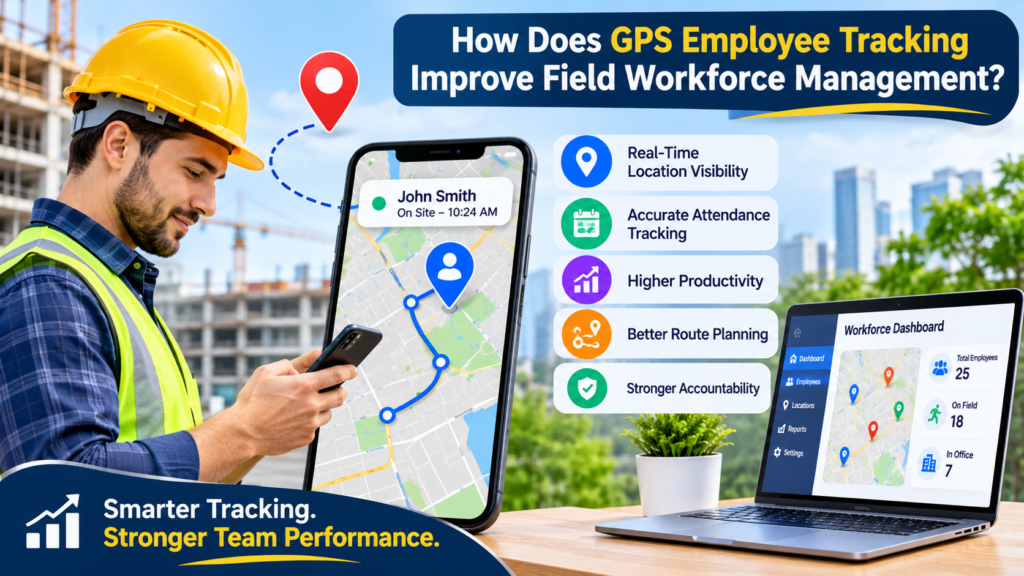

Managing field employees can be challenging for businesses because workers perform their daily responsibilities across different locations. Whether employees work in sales, delivery, construction, maintenance, or other field-based roles, managers need reliable ways to coordinate schedules, monitor attendance, and understand workforce activities.
Traditional workforce management methods often make it difficult to verify employee attendance, coordinate field operations, and maintain accurate working-hour records. GPS employee tracking offers a practical solution by providing location-based information that helps businesses manage their distributed workforce more effectively.
By combining GPS technology with employee time tracking and workforce management tools, organizations can improve operational visibility, simplify attendance management, and make better decisions about field operations.
1. Improves Real-Time Workforce Visibility
One of the main advantages of GPS employee tracking is improved visibility into field workforce operations.
Managers can use location-based tracking features to understand where employees are working during authorized working periods. This is particularly useful for businesses with employees visiting multiple client locations or performing tasks across different job sites.
Benefits include:
- Better visibility into field activities.
- Improved coordination between teams.
- Easier location verification.
- More organized field operations.
This information helps managers coordinate responsibilities without constantly contacting employees for location updates.
2. Simplifies Field Employee Attendance Management
Managing attendance for employees who work outside the office can be difficult. Traditional attendance systems may not accurately reflect when field employees begin or finish their work.
GPS-enabled attendance systems can help businesses verify location-based clock-ins and clock-outs.
Managers can use these records to review attendance, monitor working hours, and maintain more accurate employee time records.
This reduces dependence on manual attendance reporting and helps HR teams organize workforce information.
3. Improves Field Workforce Productivity
Field employees often handle several responsibilities throughout the day. Without organized workforce information, managers may struggle to understand how time is distributed across different activities.
GPS employee tracking, when combined with time tracking and project management, helps businesses understand field work patterns and identify opportunities to improve operational efficiency.
For example, managers can review work schedules, attendance records, and project activities to identify scheduling problems or unnecessary delays.
4. Helps Optimize Employee Scheduling
Efficient scheduling is important for businesses that manage employees across multiple locations.
GPS-based workforce information can help managers coordinate field assignments based on employee availability and operational requirements.
Businesses can use this information to:
- Organize employee schedules.
- Coordinate field assignments.
- Improve workload distribution.
- Plan service visits.
- Reduce scheduling conflicts.
Better scheduling helps businesses use their available workforce more effectively.
5. Supports Better Route and Location Planning
Businesses with delivery teams, technicians, and field service employees often need to coordinate activities across different locations.
Location information can help managers understand where field operations take place and identify opportunities to organize assignments more efficiently.
When combined with suitable mapping and route-planning tools, GPS data can support better travel planning and help reduce unnecessary movement.
This can improve coordination and save valuable working time.
6. Strengthens Employee Accountability
Clear attendance records and transparent location-based tracking can encourage employees to follow agreed work schedules and responsibilities.
GPS employee tracking helps businesses maintain reliable records of location-based work activities when tracking is necessary and properly communicated.
However, accountability should not depend entirely on employee location. Managers should also consider completed tasks, service quality, project progress, and individual responsibilities.
A balanced approach supports transparency without creating unnecessary pressure.
7. Improves Client Service and Response Times
Businesses that provide services at customer locations need to coordinate employee availability and assignments efficiently.
GPS tracking can help managers understand field workforce locations and make informed decisions when assigning new service requests.
For example, a service company may use location information to identify which available technician is best positioned to handle a nearby customer request.
This can improve coordination, reduce unnecessary delays, and support better customer experiences.
8. Reduces Administrative Work
Managing field attendance and employee working hours manually can create additional administrative responsibilities.
GPS-enabled time tracking systems help businesses organize location-based attendance information and working-hour records in a centralized platform.
This can reduce repetitive administrative tasks and make it easier for managers to review employee records.
HR teams can spend less time collecting manual attendance updates and more time focusing on workforce planning.
9. Supports Accurate Payroll and Timesheet Management
Accurate working-hour information is essential for payroll preparation. Missing attendance entries and incorrect timesheets can create payment errors and administrative complications.
Combining GPS tracking with employee time tracking helps businesses maintain more organized attendance and working-hour records.
Managers can review relevant records, verify discrepancies, and use approved timesheet information to support payroll calculations.
10. Helps Managers Make Data-Driven Decisions
Modern workforce management systems can combine attendance, working hours, project information, and location-based records to provide useful operational insights.
Managers can use reports to understand workforce patterns, identify scheduling challenges, and evaluate resource utilization.
These insights support better planning and help organizations improve field workforce operations over time.
What Features Should Businesses Look for in GPS Employee Tracking Software?
Choosing the right GPS employee tracking solution depends on business requirements, workforce size, and field operations.
Here are some useful features to consider:
- GPS Location Tracking: Helps verify employee locations during authorized work activities.
- Time Tracking: Records employee working hours.
- Attendance Management: Organizes clock-in and clock-out records.
- Project Tracking: Monitors time spent on different projects.
- Employee Scheduling: Helps coordinate shifts and field assignments.
- Timesheet Management: Maintains organized working-hour records.
- Reporting and Analytics: Provides information about workforce activities.
- Payroll Tools: Helps organize tracked hours for payroll preparation.
Businesses should also consider data security, employee privacy, transparent tracking policies, and compliance with applicable local laws before implementing GPS monitoring.
How Staff Time Tracker Helps Manage Field Employees
Staff Time Tracker is an all-in-one employee time tracking and workforce management platform designed for remote, hybrid, and office-based teams.
It helps businesses manage working hours, attendance, productivity, projects, timesheets, leave, and workforce activities through a centralized dashboard.
Its GPS time tracking feature supports location-based workforce visibility, while other features such as screenshot tracking, idle time detection, app and URL tracking, project tracking, reporting, and workforce analytics help managers understand team activities.
Businesses can use these capabilities to:
- Maintain organized field employee time records.
- Review location-based attendance information.
- Track project hours and activities.
- Manage employee schedules and workloads.
- Analyze workforce activity and productivity.
- Improve workforce planning and reporting.
By bringing essential workforce management activities together, Staff Time Tracker helps businesses maintain better visibility across distributed teams and organize field operations more efficiently.
Conclusion
GPS employee tracking plays an important role in modern field workforce management. It helps businesses improve location visibility, organize attendance, coordinate employee schedules, and maintain more accurate working-hour records.
When combined with effective time tracking, project management, and transparent workplace policies, GPS technology can support better workforce accountability without unnecessary micromanagement.
Businesses that adopt appropriate GPS employee tracking solutions can improve operational coordination, reduce administrative challenges, and manage field employees more effectively.
Frequently Asked Questions (FAQs)
1. What is GPS employee tracking?
GPS employee tracking is a technology that uses location information to help businesses understand employee locations during authorized work activities.
2. How does GPS tracking improve field workforce management?
It improves workforce management by supporting location-based attendance verification, employee coordination, scheduling, and operational visibility.
3. Why is GPS tracking important for field employees?
It helps businesses coordinate employees working across multiple locations, maintain attendance records, and organize field assignments.
4. Can GPS employee tracking improve productivity?
Yes. When combined with time and project tracking, GPS information can help managers identify scheduling inefficiencies and improve workforce coordination.
5. Is GPS employee tracking useful for delivery businesses?
Yes. Delivery businesses can use location information to coordinate field employees, organize assignments, and improve operational planning.
6. Can GPS tracking help manage employee attendance?
Yes. GPS-enabled time tracking can support location-based clock-in and clock-out verification for employees working outside the office.
7. Does GPS employee tracking work for remote teams?
It can be useful for remote employees who perform location-dependent work. However, it is generally more relevant to field-based roles than employees working from home.
8. What features should GPS employee tracking software include?
Important features include GPS tracking, attendance management, working-hour records, project tracking, employee scheduling, timesheets, and reporting.
9. Is GPS employee tracking legal?
Legality depends on local employment and privacy regulations. Businesses should establish clear policies, inform employees, limit tracking to legitimate purposes, and follow applicable laws.
10. How does Staff Time Tracker support GPS employee tracking?
Staff Time Tracker includes GPS time tracking alongside attendance management, timesheets, project tracking, reporting, and workforce analytics to help businesses manage distributed and field-based teams.