
Difference Between a Cold and the Flu: Symptoms and Treatment
A runny nose, sore throat, cough, and body aches can make it difficult to tell whether you have a common cold or the flu. Both are respiratory infections caused by viruses, but they differ in symptoms, severity, and recovery time.
Understanding the difference between a cold and the flu can help you manage symptoms and know when to seek medical advice.
What Is a Common Cold?
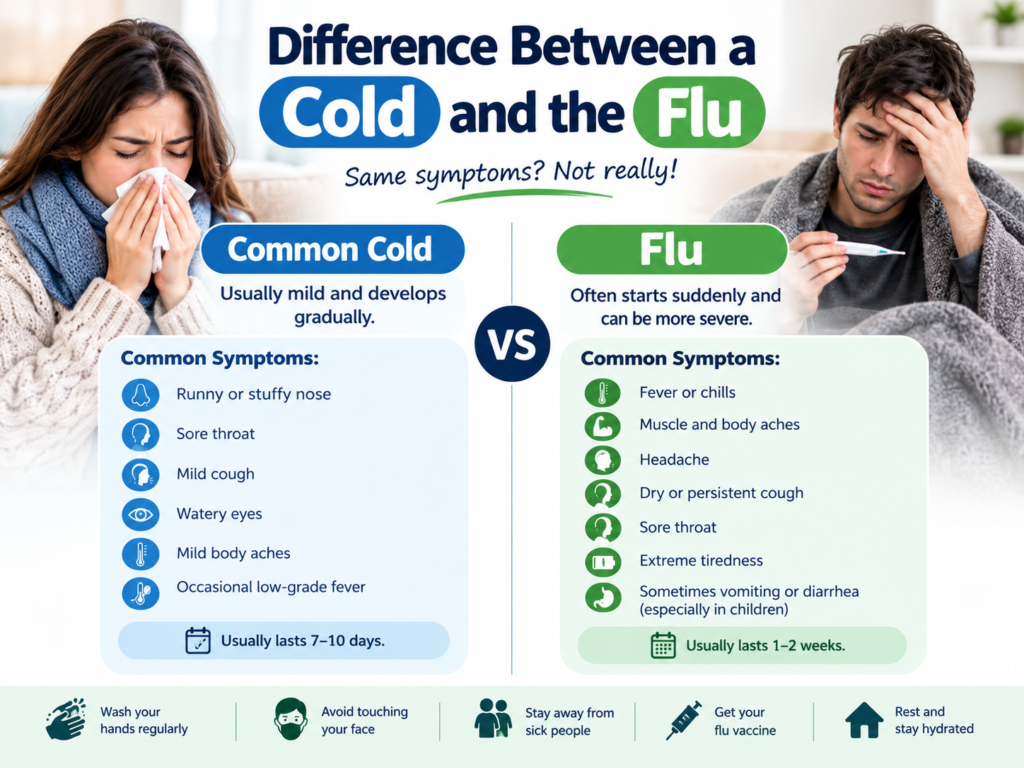
The common cold is a viral infection that mainly affects the nose and throat. It usually develops gradually and causes mild symptoms.
Common cold symptoms include:
- Runny or stuffy nose
- Sneezing
- Sore throat
- Mild cough
- Watery eyes
- Mild body aches
- Occasional low-grade fever
Most people recover from a cold within 7 to 10 days.
What Is the Flu?
The flu, also known as influenza, is a contagious respiratory infection caused by influenza viruses. It often begins suddenly and can cause more severe symptoms than a common cold.
Common flu symptoms include:
- Fever or chills
- Muscle and body aches
- Headache
- Dry cough
- Sore throat
- Extreme tiredness
- Runny or stuffy nose
Some people, especially children, may also experience vomiting or diarrhea.
Difference Between a Cold and the Flu
| Symptoms | Common Cold | Flu |
|---|---|---|
| Onset | Gradual | Sudden |
| Fever | Rare | Common |
| Body aches | Mild | Often severe |
| Fatigue | Mild | Strong |
| Sneezing | Common | Sometimes |
| Headache | Less common | Common |
| Cough | Usually mild | Can be severe |
A cold mainly affects the nose and throat, while the flu often causes stronger body aches, fever, and fatigue.
Causes of Cold and Flu
Different viruses cause these infections. Rhinoviruses are a common cause of colds, while influenza viruses cause the flu.
Both can spread through respiratory droplets, close contact, and contaminated surfaces.
Treatment and Recovery
There is no specific cure for the common cold, but rest, fluids, saline nasal sprays, and suitable symptom-relief medicines may help.
Flu treatment may include rest, hydration, and fever-relieving medicines. Doctors may prescribe antiviral medication, especially for people at higher risk of complications. It works best when started early.
Antibiotics do not treat either illness because both are caused by viruses.
How to Prevent Cold and Flu
- Wash your hands regularly.
- Avoid touching your face with unwashed hands.
- Cover your mouth when coughing or sneezing.
- Avoid close contact with sick people.
- Keep frequently touched surfaces clean.
- Get an annual flu vaccination.
When Should You See a Doctor?
Seek medical advice if symptoms become severe or continue getting worse. Get urgent care for difficulty breathing, chest pain, confusion, severe weakness, or signs of dehydration.
Conclusion
The main difference between a cold and the flu is symptom severity and how quickly symptoms develop. Colds usually cause mild, gradual symptoms, while the flu often starts suddenly with fever, body aches, and extreme tiredness. Proper care and prevention can help protect your health.
Frequently Asked Questions
Can a cold turn into the flu?
No. Different viruses cause these infections.
Can you have the flu without a fever?
Yes. Not everyone with influenza develops a fever.
Is the flu more serious than a cold?
Yes. The flu can cause serious complications, especially in high-risk individuals.