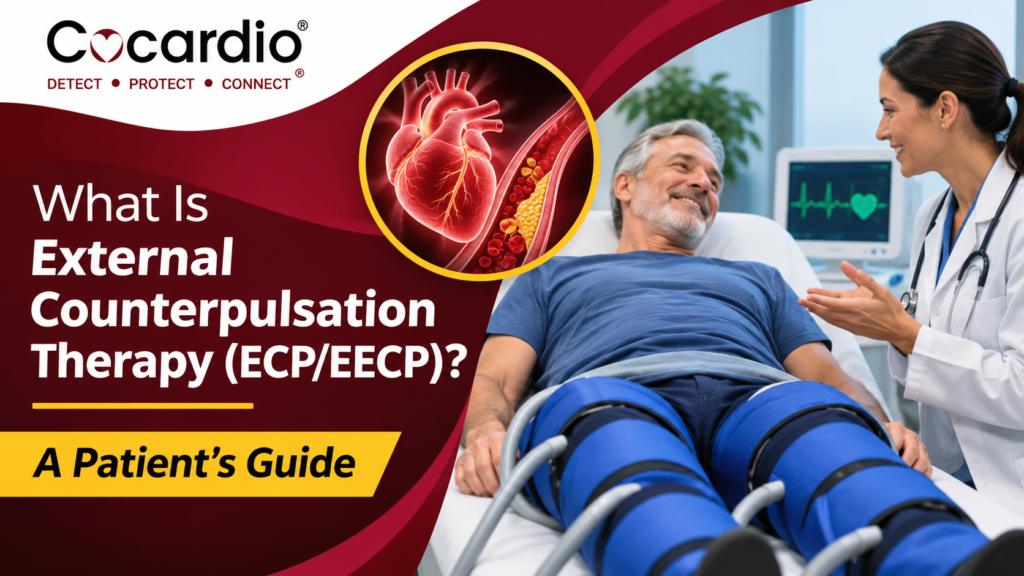

External counterpulsation therapy is a non-invasive cardiovascular treatment that uses controlled pressure around the legs to influence blood circulation during the cardiac cycle. Often called ECP or Enhanced External Counterpulsation (EECP), it is primarily used to help selected patients manage chronic stable angina when other appropriate treatments have not provided adequate symptom relief. Unlike heart surgery or catheter-based procedures, this treatment does not require incisions or instruments inserted into the arteries. At CoCardio® in Encinitas, California, patients can learn about counterpulsation, its potential benefits, and whether an evaluation may be appropriate for their cardiovascular concerns.
What Is External Counterpulsation Therapy and How Does It Work?
External counterpulsation therapy is an outpatient procedure that uses inflatable cuffs placed around the calves, thighs, and lower body to apply pressure in coordination with the heartbeat. The system uses electrocardiogram (ECG) monitoring to time the inflation and deflation of these cuffs during different phases of the cardiac cycle. This synchronized compression is designed to increase pressure during the heart’s relaxation phase and reduce resistance when the heart pumps. The resulting circulatory effects may help relieve angina symptoms in appropriately selected patients.
What Happens During Each Heartbeat?
The heart has two main phases during every heartbeat: systole, when the heart contracts, and diastole, when it relaxes and fills with blood. During diastole, the counterpulsation cuffs inflate sequentially, beginning in the lower legs and progressing upward. The cuffs then deflate rapidly before the next contraction, helping reduce pressure against which the heart must pump. This precisely timed process is the fundamental mechanism behind counterpulsation treatment.
Is ECP the Same as EECP?
The terms ECP and EECP are frequently used interchangeably, although EECP specifically refers to enhanced external counterpulsation systems. Both descriptions generally refer to treatments that use synchronized lower-body compression to influence cardiovascular circulation. Patients may encounter either name when researching medical literature, discussing options with clinicians, or comparing providers. Understanding the terminology can make it easier to interpret treatment information and insurance documentation.
Why Is External Counterpulsation Used for Heart Conditions?
The principal established clinical application of counterpulsation is the management of selected patients with chronic stable angina. Angina is chest discomfort that occurs when the heart muscle does not receive enough oxygen-rich blood to meet its needs. It may develop during physical activity, emotional stress, or other situations that increase the heart’s workload. Counterpulsation may be considered when symptoms persist despite appropriate medical management and additional revascularization procedures are unsuitable or unavailable.
Can EECP Help Patients With Chronic Stable Angina?
Some patients with chronic stable angina report reduced chest discomfort or improved exercise tolerance after completing an appropriate EECP course. The potential benefit relates to symptom management rather than guaranteed elimination of coronary artery disease. According to the 2023 American Heart Association and American College of Cardiology chronic coronary disease guideline, EECP may be considered for symptom relief in patients with refractory angina who have no other treatment options. Patients researching eecp therapy for angina should discuss their symptoms, previous treatments, and eligibility with a qualified cardiologist.
Does Counterpulsation Remove Blocked Arteries?
Counterpulsation does not physically remove cholesterol deposits, open blocked arteries with a balloon, or insert a coronary stent. Its intended effects involve cardiovascular pressure changes and circulation rather than mechanical removal of plaque. Although some patients may experience improved symptoms, this does not prove that coronary blockages have disappeared or that the underlying disease has been reversed. Appropriate medications, cardiovascular risk management, and follow-up care remain essential for patients with coronary artery disease.
What Happens During an EECP Treatment Session?
An EECP session is generally performed in an outpatient setting while the patient lies on a treatment table. Trained personnel place inflatable cuffs around the lower body and attach monitoring equipment to synchronize treatment with the heartbeat. Once the system is activated, patients feel repeated compression and release around their legs. The procedure does not ordinarily require general anesthesia, surgical incisions, or hospitalization.
Step 1 — Initial Medical Assessment
Before treatment begins, a healthcare professional should review the patient’s cardiovascular diagnosis, medical history, medications, and current symptoms. Previous testing and treatment records may also help determine whether EECP is appropriate. Certain cardiovascular or vascular conditions can make the procedure unsuitable or require additional precautions. A thorough assessment helps establish medical eligibility and provides an opportunity to discuss expectations.
Step 2 — Preparing for the Procedure
Patients generally lie comfortably on a treatment table while the equipment is positioned around their legs. ECG electrodes are attached to monitor the cardiac cycle, and additional sensors may be used depending on the equipment. The clinician checks cuff placement and confirms that the patient is ready before starting compression. Patients should report any discomfort or medical concerns before and during treatment.
Step 3 — Synchronized Compression
During treatment, the cuffs inflate and deflate repeatedly according to the patient’s heartbeat. Patients typically experience rhythmic pressure around their calves, thighs, and lower body. The sensation may feel unusual during an initial session, but it should not cause severe pain. Healthcare personnel monitor the process and may adjust or stop treatment if clinically necessary.
Step 4 — Completing the Appointment
After the session, the cuffs and monitoring equipment are removed, and the patient can usually return to normal activities according to medical advice. Staff may ask about symptoms, discomfort, or changes noticed during treatment. Some patients experience temporary leg soreness, skin irritation, or fatigue, while others report little immediate discomfort. Patients should communicate any unexpected symptoms before leaving the facility.
How Many Sessions Are Typically Required?
A conventional course commonly consists of 35 treatment sessions, each lasting approximately one hour. Many programs schedule five sessions per week over roughly seven weeks, although the exact arrangement may vary. Consistency is important because EECP is generally delivered as a treatment course rather than an isolated appointment. The appropriate schedule should be determined by the treating clinician according to the patient’s medical circumstances.
Can Patients Notice Improvements Before Finishing Treatment?
Some patients report changes in angina symptoms or activity tolerance during a treatment course, while others may notice little improvement. The timing and degree of symptom relief vary, and a favorable outcome cannot be guaranteed. Clinicians may monitor symptom patterns, medication use, and activity limitations to help evaluate the response. Patients should continue following their established treatment plan unless their cardiologist recommends changes.
What Does the Evidence Say About EECP and Coronary Blood Flow?
Counterpulsation is designed to influence pressure and circulation during the cardiac cycle, particularly during diastole. Researchers have investigated whether these effects can improve angina symptoms, exercise tolerance, and other measures of cardiovascular function. The evidence supports considering EECP for symptom relief in a limited group of patients with refractory angina, but it does not establish the treatment as a cure for coronary artery disease. Patients can review the EECP and Coronary Blood Flow – CoCardio® Patient Education Guide for additional educational information about the treatment concept.
Can Better Circulation Improve Everyday Activities?
Angina can limit ordinary activities such as walking, climbing stairs, or performing household tasks. For some eligible patients, successful symptom management may improve their ability to participate in these activities. However, changes in physical activity should be discussed with the treating healthcare professional, particularly when symptoms have previously occurred with exertion. EECP should not be interpreted as permission to disregard chest discomfort or increase exercise intensity without appropriate guidance.
Who May Be a Candidate for EECP?
Patients with chronic stable angina that remains troublesome despite appropriate treatment may be considered for an EECP evaluation. This can include certain individuals who are not suitable candidates for additional coronary angioplasty or bypass surgery. Medical eligibility depends on symptom severity, cardiovascular history, previous treatment, and the presence of potential contraindications. A cardiologist should determine whether the treatment fits into the patient’s overall care plan.
Who May Not Be Suitable for Treatment?
EECP is not appropriate for every patient, and particular medical conditions may make treatment unsafe. Examples include certain significant heart valve disorders, uncontrolled arrhythmias, severe peripheral arterial disease, and decompensated heart failure. Other medical concerns, including significant vascular or bleeding conditions, may require further evaluation before treatment can be considered. Patients should never assume eligibility based only on their symptoms or an online description of the procedure.
Is EECP an Emergency Treatment?
EECP is not an emergency treatment for a heart attack, unstable chest pain, or other acute cardiovascular conditions. It is a scheduled outpatient procedure intended for selected patients after appropriate clinical assessment. Sudden, severe, persistent, or worsening chest discomfort requires immediate medical attention rather than an EECP appointment. Anyone experiencing possible heart attack symptoms should call 911 and follow emergency medical instructions.
What Are the Potential Benefits and Limitations?
The main potential benefit of EECP is improved symptom control in selected patients with chronic stable angina. Some individuals may experience less frequent chest discomfort or better exercise tolerance, although clinical responses differ. The treatment does not replace prescribed medication, cardiac rehabilitation, emergency treatment, or medically necessary coronary procedures. Patients should weigh the possible benefits against the time commitment, costs, contraindications, and limitations of the available evidence.
Is EECP Better Than Medication or Surgery?
EECP, medication, angioplasty, and bypass surgery have different purposes and are not directly interchangeable. Standard medical therapy remains essential for controlling cardiovascular risk factors and managing coronary artery disease. Angioplasty or bypass surgery may be necessary for selected patients depending on their coronary anatomy, symptoms, and overall clinical condition. EECP is generally considered an additional symptom-management option when established approaches are insufficient or other interventions are unsuitable.
How Much Does EECP Treatment Cost?
The total expense of an EECP course depends on the treatment provider, number of sessions, insurance coverage, and services included in the quoted price. Patients should ask whether initial consultations, clinical assessments, monitoring, and follow-up appointments involve additional charges. Medicare covers external counterpulsation for certain qualifying patients with severe stable angina under specific medical criteria, while commercial insurance policies may differ. Contacting a provider directly is the most reliable way to request current pricing and clarify potential financial responsibilities.
Does Medicare Cover EECP?
Medicare’s national coverage determination addresses patients with disabling Class III or IV stable angina who meet specific eligibility requirements. These include circumstances in which a cardiologist or cardiothoracic surgeon considers the patient unsuitable for certain coronary revascularization procedures. Coverage is not automatically available for general heart disease prevention, cardiovascular wellness, or every condition associated with reduced circulation. Patients should review the official Medicare coverage policy and confirm their individual benefits before beginning treatment.
How Do You Choose an EECP Provider?
When comparing eecp therapy centers, consider the clinical evaluation process, treatment supervision, patient communication, and transparency about costs. A suitable facility should explain how treatment works, identify potential risks, and provide realistic expectations about symptom improvement. Patients should also ask how the provider coordinates with their existing cardiologist and handles concerns during treatment. Selecting a center based solely on proximity or promotional claims may overlook important clinical considerations.
Questions to Ask Before Scheduling
Before starting eecp treatment, ask whether your diagnosis meets established clinical indications and whether additional medical review is necessary. Find out how long the treatment course lasts, what monitoring is provided, and which potential side effects should be discussed. It is also reasonable to ask about insurance verification, appointment scheduling, and financial responsibilities. Clear answers can help you make an informed decision without feeling pressured to commit immediately.
Why Learn About ECP/EECP at CoCardio® in Encinitas?
CoCardio® offers cardiovascular education and circulation-focused services for patients exploring non-invasive options in Encinitas, California. The clinic’s approach includes discussing cardiovascular wellness goals, available assessment options, and the possible role of counterpulsation in appropriate circumstances. Patients interested in ecp therapy can use educational resources to prepare questions before speaking with a healthcare professional. Any treatment decision should reflect an individualized medical evaluation and remain coordinated with established cardiology care.
Taking the First Step Toward an Evaluation
If you are searching for EECP therapy near me, contacting CoCardio® can help you learn more about available consultation options. The Encinitas team can provide information about services, appointment inquiries, and questions to raise regarding medical suitability. Patients can describe their concerns and request guidance on the next steps without assuming that counterpulsation is appropriate for their condition. Submitting an inquiry is a practical way to begin exploring available options and preparing for an informed discussion.
Contact CoCardio® in Encinitas, California
Phone: +1(858) 500-1399
Address: 162 S Rancho Santa Fe Rd, Suite B55, Encinitas, CA 92024
Request Information Through the CoCardio® Contact Form
Frequently Asked Questions About ECP and EECP
Is External Counterpulsation Therapy Painful?
External counterpulsation therapy involves repeated pressure around the lower body, which patients may find unusual or uncomfortable. The procedure does not involve surgical incisions, although some individuals may experience temporary soreness, bruising, or skin irritation. Severe pain should not be considered a normal treatment experience and must be reported immediately. Healthcare personnel can assess symptoms and determine whether treatment should be adjusted or discontinued.
Is ECP Therapy Safe for Older Adults?
Age alone does not determine whether a patient is suitable for ecp therapy. Older adults may have medical conditions or medications that influence treatment eligibility and safety. Cardiovascular history, circulation problems, heart valve disorders, and other relevant factors should be reviewed before scheduling treatment. A qualified healthcare professional must evaluate the patient’s individual risks and potential benefits.
Can EECP Prevent a Heart Attack?
EECP has not been established as a treatment that prevents heart attacks or eliminates the risk of future cardiovascular events. Its recognized role is primarily related to symptom relief in selected patients with chronic stable angina. Effective cardiovascular prevention continues to depend on appropriate medication, risk-factor management, healthy lifestyle measures, and medical follow-up. Patients should be cautious of any claim that counterpulsation guarantees protection against a heart attack or stroke.
Can EECP Replace Cardiac Rehabilitation?
EECP and cardiac rehabilitation are different interventions with distinct clinical purposes. Cardiac rehabilitation typically combines supervised exercise, education, and cardiovascular risk management for eligible patients. EECP uses synchronized compression to produce circulatory effects and may be considered for symptom management in selected cases. Patients should not substitute one for the other without discussing their medical needs with their cardiologist.
How Can I Find Out Whether EECP Is Right for Me?
The first step is reviewing your symptoms, medical history, and previous cardiovascular treatments with a qualified healthcare professional. Patients with ongoing stable angina may benefit from discussing whether additional treatment options should be considered. CoCardio® in Encinitas provides information about its consultation process and available cardiovascular services. You can request further details through the clinic’s online form or by calling +1(858) 500-1399.
Conclusion
External counterpulsation therapy offers a non-invasive option that may help selected patients manage chronic stable angina when appropriate conventional treatments have not provided sufficient symptom relief. The procedure uses heartbeat-synchronized compression around the lower body and generally involves a structured course of outpatient sessions. Although some patients experience improved symptoms or activity tolerance, EECP does not remove coronary blockages or replace necessary cardiovascular care. To learn about available consultation options at CoCardio® in Encinitas, call +1(858) 500-1399 or complete the CoCardio® online inquiry form.
Medical Disclaimer
This article is provided by CoCardio® for general educational and informational purposes only and does not constitute individualized medical advice, diagnosis, or treatment recommendations. EECP may be considered for certain patients with chronic stable angina, but its suitability, benefits, risks, and contraindications vary according to individual medical circumstances. The treatment is not a substitute for prescribed medications, emergency cardiac care, or other interventions recommended by a qualified healthcare professional. Always consult your cardiologist before starting, changing, or discontinuing any cardiovascular treatment.
If you experience new, severe, persistent, or worsening chest pain, especially with shortness of breath, sweating, nausea, or fainting, call 911 immediately. Do not delay emergency medical attention to arrange an outpatient EECP consultation.