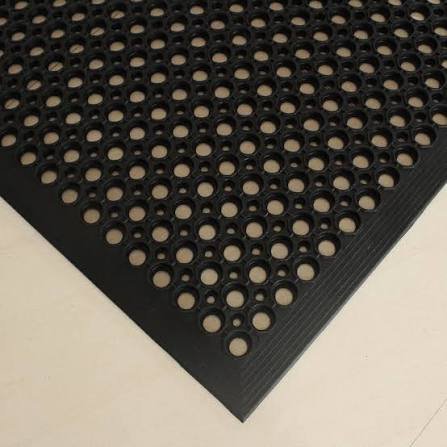

Concrete, asphalt, and stone subfloors remain standard building bases across UK commercial facilities, agricultural estates, and industrial complexes. However, raw concrete is inherently unyielding, cold, and prone to surface dusting under physical wear. While originally developed to protect livestock from hard flooring, heavy-duty rubber stable mats have gained significant traction across broader commercial, light industrial, and specialized facility applications.
The high-density composition engineered to withstand equine loads makes heavy rubber matting exceptionally durable for human workspaces. Understanding how dense vulcanized rubber functions under dynamic impact and static standing enables facility managers, workshop owners, and safety directors to select optimal floor protection that balances thermal resistance, subfloor preservation, and physical comfort.
What Are Rubber Stable Mats?
Industrial-grade rubber stable mats are thick, heavy-duty rubber panels manufactured primarily from vulcanized natural rubber, recycled tire compounds, or dense synthetic polymers. Designed to endure extreme point loads, continuous moisture exposure, and heavy impact, these mats provide a resilient buffer over cold subfloors.
Unlike softer open-cell foam pads, heavy rubber mats feature a high shore hardness rating. This structural density prevents bottoming out under substantial weight, ensuring the mat retains its shape, energy absorption properties, and structural integrity over years of continuous use.
Key Structural Attributes
When specified for commercial, agricultural, or workshop spaces, dense rubber matting provides several distinct physical advantages:
-
High-Impact Point Load Resistance: Protects subfloors from cracking under dropped tools, machinery feet, and heavy equipment.
-
Thermal Moisture Barrier: Blocks dampness and cold rising from subterranean concrete slabs, maintaining a drier surface environment.
-
Surface Traction Patterns: Features molded grooves, bubble tops, or hammer-top textures to maximize grip under wet or muddy conditions.
Operational Considerations
While heavy rubber matting provides unmatched toughness, facility planners must consider specific installation factors:
-
Panel Weight: Due to high material density, individual solid rubber slabs are heavy and require proper lifting techniques during installation.
-
Seam Management: Straight-edged panels laid side-by-side must be fitted tightly to prevent debris from working into joint gaps over time.
Biomechanical Impact: How Surface Deflection Protects Standing Workforce Health
Prolonged stationary standing on unyielding concrete exerts severe stress on human joints, muscles, and circulatory function. When an individual remains standing on a rigid floor, the calf and thigh muscles undergo continuous static contraction. This restricts venous blood flow, leading to lower extremity pooling, joint stiffness, and chronic fatigue across long shifts.
Concrete offers zero deflection, forcing the body’s skeletal alignment to absorb 100% of the kinetic feedback. Over extended periods, this causes lower back strain, heel impact pain, and long-term musculoskeletal disorders. When standing on an unyielding static surface like concrete, direct physical impact causes continuous muscle contraction, impairing blood circulation and accelerating spinal and joint fatigue. Conversely, an elastic surface provides controlled force deflection, stimulating micro-movements in the feet and ankles that promote active venous return and sustain joint comfort.
Integrating resilient Anti-Fatigue Mats or specialized rubber floor covers introduces controlled shock absorption beneath the feet. This structural elasticity encourages microscopic muscle movements in the feet and calves, activating the body’s natural venous pump to maintain circulation, reduce joint stress, and improve worker endurance throughout the workday.
Material Formulations: Heavy-Duty Rubber vs Specialized Ergonomic Compounds
Selecting the correct flooring material requires matching the polymer compound to your facility’s environmental demands, chemical exposures, and foot-traffic intensity.
Heavy-Duty Recycled Rubber (NR/SBR)
Standard heavy-duty mats are typically molded from vulcanized styrene-butadiene rubber (SBR) or reclaimed tire rubber. This yields incredible tear strength, high density, and cost-effective surface protection for heavy impact areas, equine stalls, and equipment storage bays. However, general SBR rubber can degrade when exposed to mineral oils or harsh industrial solvents.
Nitrile Rubber (NBR)
For environments subject to oil, grease, or chemical spills—such as automotive workshops, commercial kitchens, and machining facilities—high-nitrile rubber compounds are essential. Nitrile retains its non-slip grip and structural flexibility without swelling, softening, or curling when saturated with synthetic oils or cutting fluids.
High-Density EVA and Micro-Cellular Polyurethane
Where maximum leg comfort is prioritized over extreme load bearing—such as packaging lines or standing desk workstations—polyurethane and high-density EVA foams offer softer surface deflection. While unsuitable for heavy vehicle tires or shod livestock, these materials excel at providing lightweight ergonomic support for standing personnel.
Comparing Flooring Solutions: Rubber Stable Mats vs Rubber Sheeting and Epoxy Coatings
Evaluating different floor coverings helps determine whether heavy panel matting, continuous rolls, or liquid surface seals best fit your operational requirements.
| Feature / Metric | Heavy-Duty Rubber Stable Mats | Continuous Rubber Sheet Flooring | Epoxy Floor Coatings |
| Primary Focus | Heavy impact protection and durability | Broad-area coverage with minimal seams | Liquid-proof concrete seal |
| Material Thickness | 12mm to 22mm (Thick, dense panel) | 3mm to 10mm (Flexible roll product) | 1mm to 3mm (Rigid resin layer) |
| Load Capacity | Extreme (machinery, vehicles, heavy loads) | Moderate to High (rolling carts, foot traffic) | High static weight; chips on drop impact |
| Subfloor Insulation | High thermal and acoustic barrier | Moderate thermal insulation | None (transfers cold directly) |
| Installation Style | Loose-laid panels, easy replacement | Rolled out, loose or glued down | Multi-stage liquid application and curing |
| Fluid Sealing | Joints exist between individual panels | Low seam count minimizes fluid entry | 100% seamless, continuous fluid barrier |
Facilities outfitting stables, agricultural bays, or heavy workshop zones benefit from exploring specialized heavy-duty stable matting options to secure impact protection and subfloor longevity under severe loads.
Practical Applications Across UK Workspaces
Deploying dense rubber mats effectively involves matching surface profiles and panel thicknesses to the specific physical demands of each work area.
Workshops, Garages, and Maintenance Bays
Mechanical workshops demand flooring that handles dropped engine parts, heavy tool chests, and foot traffic. Placing thick rubber mats around workbenches and machine stations protects expensive hand tools from breaking on concrete while insulating mechanics from cold subfloors during winter operations.
Commercial Stabling and Agricultural Facilities
In livestock management and equestrian centers across the UK, rubber matting remains the gold standard for stall floors. Replacing hard concrete surfaces with cushioned rubber reduces bedding costs, provides thermal insulation against cold ground, and protects animals’ joints during resting and standing periods.
Industrial Storage and Heavy Equipment Zones
In storage facilities handling heavy ironwork, machinery components, or kegs, standard concrete floors suffer from severe surface chipping. Heavy rubber matting absorbs these high-energy drops, preserving the underlying structural concrete slab and reducing noise echo across large open bays.
Frequently Asked Questions
What makes rubber stable mats suitable for general industrial use?
Their high structural density, heavy load tolerance, and thermal insulation make them ideal for protecting concrete subfloors against dropped heavy equipment while providing a durable, slip-resistant standing surface for workers.
Can rubber stable mats be used on top of concrete floors?
Yes, heavy rubber mats are designed to lie directly over concrete. Their substantial self-weight keeps them flat and secure without requiring permanent adhesives, allowing for easy lifting and cleaning when necessary.
How do rubber mats protect tools and equipment from damage?
Unlike bare concrete, dense rubber yields slightly under dynamic impact. When heavy hand tools, machined parts, or components drop onto rubber, the material absorbs energy, preventing tool breakage and subfloor cracking.
Are rubber mats difficult to clean in commercial settings?
No, heavy rubber mats can be swept, vacuumed, or pressure-washed with water and mild detergents. Drainage channels molded into the underside of many panels allow moisture underneath to dry efficiently.
How do thick rubber mats provide thermal insulation?
Rubber has low thermal conductivity, making it an effective insulator. Laying thick rubber panels over concrete slabs blocks cold ground temperatures, keeping workers’ feet warmer in unheated UK warehouses and workshops.
What is the difference between smooth-top and textured rubber mats?
Smooth-top mats are easier to sweep clean of dust and wood shavings, making them suitable for dry workshops. Textured surfaces (such as bubble, ribbed, or hammer-top patterns) provide enhanced slip resistance in wet, muddy, or greasy environments.
Will heavy machinery deform dense rubber matting over time?
High-density vulcanized rubber possesses high elastic memory. While it compresses slightly under static weight to absorb load stress, it rebounds to its original shape once the load is removed.
How do I prevent water from trapping beneath loose-laid rubber mats?
Selecting mats with grooved or stud-patterned undersides allows air circulation and moisture drainage underneath the panels. Periodic lifting and cleaning of loose-laid mats further prevents moisture accumulation on raw concrete subfloors.