


Cricket is one of the world’s most popular sports, followed by millions of fans across Asia, Europe, Australia, Africa, and other regions. From traditional Test matches to fast-paced T20 competitions, cricket offers different formats, playing styles, and tournament structures. Understanding the major teams, match formats, key player roles, and international competitions provides a strong foundation for following the game.
Understanding the Basics of Cricket
Cricket is played between two teams, with each side generally consisting of eleven players. The main objective is to score more runs than the opposing team. Players alternate between batting and fielding, with one team attempting to score runs while the other tries to dismiss batters and restrict scoring.
A cricket match takes place on a large field with a central pitch. The pitch contains wickets at both ends, and the bowler delivers the ball toward the batter. Batters score runs by hitting the ball and running between the wickets or by striking boundaries.
The sport combines individual skill with team strategy. Batters need concentration and timing, bowlers require accuracy and variation, while fielders contribute through catching, throwing, and preventing runs.
Major Cricket Formats
Modern cricket is divided into three primary international formats: Test cricket, One Day Internationals, and Twenty20 Internationals.
Test Cricket
Test cricket is the longest format and can last up to five days. It provides an extensive examination of batting technique, bowling endurance, tactical planning, and concentration.
Teams usually have two innings each, subject to the match situation and applicable rules. Test cricket is particularly known for strategic battles between batters and bowlers, changing pitch conditions, and the importance of patience.
One Day International Cricket
One Day Internationals, commonly called ODIs, provide a shorter format than Tests. Each team normally receives a limited number of overs in which to score runs.
The format creates a balance between traditional batting techniques and aggressive scoring. Teams must manage wickets and run rates while adapting their strategies throughout the innings.
Twenty20 Cricket
T20 cricket is the shortest major international format. Each side normally receives twenty overs, creating a fast-paced style of cricket.
Batters often look for scoring opportunities from the beginning, while bowlers use variations such as slower deliveries, yorkers, and changes of pace. Fielding is also extremely important because individual runs can have a significant impact on a short match.
Major International Cricket Teams
Several national teams have played important roles in international cricket.
India
India has one of the world’s largest cricket audiences and a highly developed domestic cricket structure. The country has produced generations of internationally recognized batters, bowlers, wicketkeepers, and all-rounders.
India regularly competes in major international tournaments and bilateral series across all three formats.
Australia
Australia has a long and distinguished history in international cricket. The country has produced many successful teams and players across Test, ODI, and T20 cricket.
Australian cricket is also supported by a strong domestic structure, providing pathways for emerging players.
England
England is one of cricket’s oldest international teams and has played a central role in the development of the sport. England competes in all major formats and has established domestic competitions that contribute to its player-development system.
Pakistan
Pakistan has produced many talented fast bowlers, batters, and all-rounders. Its cricketing tradition is particularly known for producing players with distinctive bowling styles and strong individual skills.
Bangladesh
Bangladesh has become an established international cricket nation, competing regularly in major tournaments and bilateral series. Cricket is one of the country’s most followed sports, and the national team has produced notable performances across different formats.
South Africa
South Africa has a strong cricketing tradition and is recognized for producing high-quality fast bowlers, technically accomplished batters, and versatile all-rounders. The national team competes across all major international formats.
Key Player Roles in Cricket
Cricket teams require players with different responsibilities. Understanding these roles makes matches easier to follow.
Opening Batters
Opening batters begin an innings and face the opposition’s new-ball bowlers. They often need to combine defensive technique with scoring ability.
Middle-Order Batters
Middle-order players enter after the opening phase and can play different roles depending on the match situation. Some specialize in rebuilding an innings, while others are aggressive run-scorers.
All-Rounders
All-rounders contribute with both bat and ball. Their versatility can provide teams with greater tactical flexibility and additional options during a match.
Fast Bowlers
Fast bowlers attempt to dismiss batters through speed, movement, bounce, and accuracy. They can be especially influential when conditions favor seam or swing bowling.
Spin Bowlers
Spin bowlers use changes in rotation, trajectory, and pace to challenge batters. Spinners can become particularly important on pitches that provide assistance to slower bowling.
Wicketkeepers
The wicketkeeper stands behind the stumps and plays a specialized fielding role. They must react quickly to deliveries and can contribute significantly through catches and stumpings.
How Cricket Matches Are Decided
The method used to determine a winner depends on the format.
In limited-overs cricket, teams generally have a fixed number of deliveries available. The side scoring the most runs usually wins, subject to the competition’s rules.
Test cricket has a more complex structure because teams have multiple innings and matches can end in a win, loss, draw, or tie.
Tournament rules can also include additional mechanisms for determining results in certain knockout situations. Therefore, fans should understand the specific regulations of each competition.
Major Cricket Tournaments
International cricket includes several major tournaments and championship events.
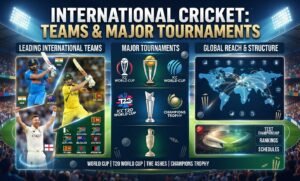
The Cricket World Cup is one of the most prominent ODI competitions, bringing leading national teams together. The ICC Men’s T20 World Cup provides a global championship in the shortest international format.
Test cricket has its own championship structure, with teams competing across a cycle before the leading sides meet in a final.
Regional tournaments are also important. Competitions involving Asian, European, African, or other cricketing nations can provide additional opportunities for international teams to compete.
Domestic Cricket and Professional Leagues
Domestic cricket is essential to the development of international players. National systems provide competitive environments where emerging talent can gain experience.
Professional T20 leagues have also transformed the modern cricket landscape. These competitions attract international players and create opportunities for specialists in batting, bowling, wicketkeeping, and all-round play.
Domestic competitions can therefore serve both as entertainment and as a pathway toward international cricket.
What Makes a Cricket Match Exciting?
Several factors can influence the flow of a cricket match. Pitch conditions, weather, team selection, player form, bowling combinations, and tactical decisions can all affect performance.
A match may change quickly after a partnership develops, a key wicket falls, or a bowler produces a successful spell.
In limited-overs cricket, the required run rate can become an important factor. In Test cricket, sessions of play can gradually change the balance of a match through patient batting or sustained bowling pressure.
Following Cricket Online
Cricket fans can follow live scores, fixtures, results, player statistics, rankings, team announcements, and tournament news through official cricket organizations and reputable sports publications.
Digital platforms have made it easier to follow matches from different countries and time zones. Fans can also use statistical databases to compare batting averages, bowling figures, strike rates, wicket totals, and other performance indicators.
When exploring commercial sports-related websites, an online betting agent list should be treated separately from official cricket information. Match schedules, tournament rules, player statistics, and international results are best verified through authoritative cricket sources.
The Future of Cricket
Cricket continues to evolve through changes in technology, playing conditions, broadcasting, and competition formats. T20 cricket has introduced new audiences to the sport, while Test and ODI cricket remain important parts of the international calendar.
Technology such as video review systems, ball-tracking tools, advanced statistics, and digital broadcasting has also changed how matches are analyzed and watched.
At the same time, the continued development of women’s cricket and emerging cricket nations is expanding the sport’s international reach.
Conclusion
Cricket combines athletic ability, technical skill, strategy, and teamwork. Its three major formats offer distinctly different experiences, from the long tactical battles of Test cricket to the fast pace of T20 matches.
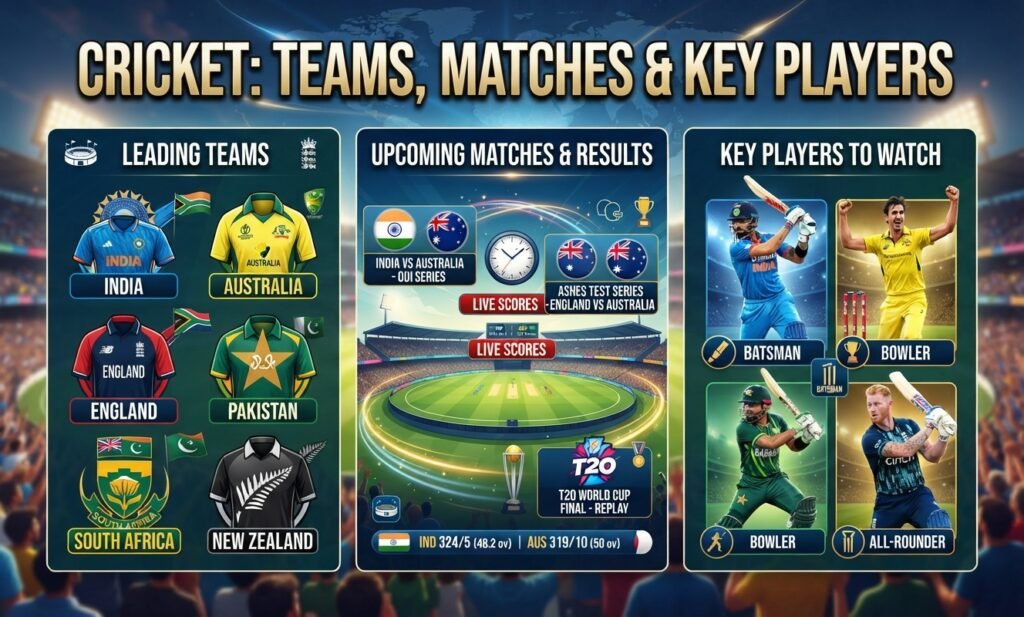
Major teams such as India, Australia, England, Pakistan, Bangladesh, and South Africa have contributed significantly to international cricket, while players in specialized roles work together to produce competitive matches.
By understanding team structures, player responsibilities, match formats, tournaments, and statistics, fans can gain a deeper appreciation of cricket and follow the sport more effectively throughout the international and domestic calendar.