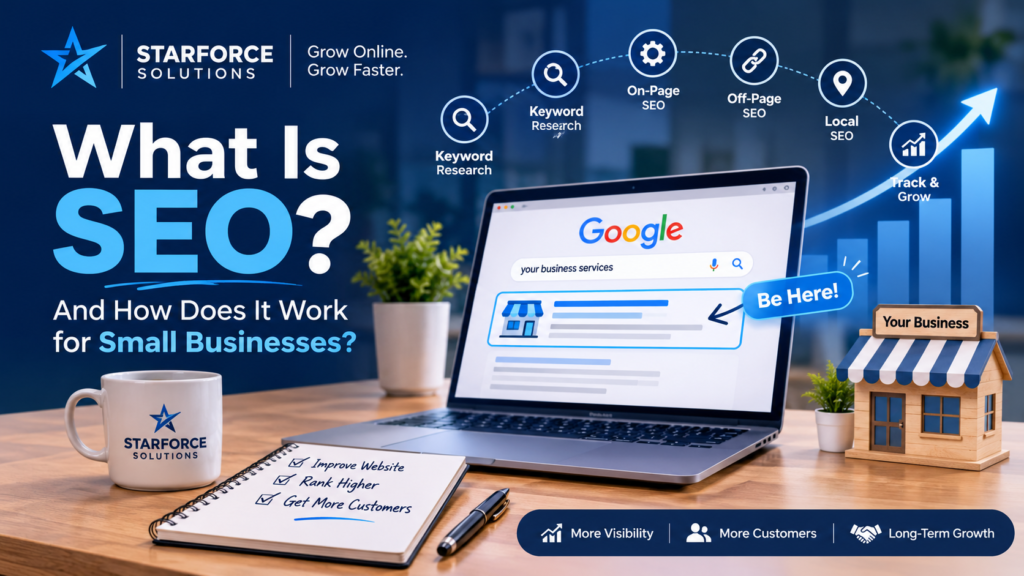

If you own a small business, your next customer is probably typing a question into Google right now. They scan the first few results, click one, and decide within seconds whether to call, book, or buy. Search engine optimization, better known as SEO, is the practice of making sure your business is one of those results. In this guide, we explain what SEO is, how it works, and how small businesses can use it to grow without relying only on paid ads.
What Is SEO?
SEO is the process of improving your website so search engines such as Google and Bing can understand it, trust it, and show it to people searching for what you offer. Unlike paid advertising, you do not pay for each click. Instead, you earn visibility by publishing useful content, building a technically sound website, and proving that your business is credible.
At Starforce Solutions, we work with business owners who often begin with the same question: “Why does my competitor appear above me?” In most cases, the answer is that the competitor has done the basics of SEO better, not that they have a bigger budget.
How Does SEO Work?
Search engines follow three main steps:
- Crawling: Automated bots, often called crawlers, move across the web by following links and discovering pages.
- Indexing: The search engine stores and organizes what it finds so it can retrieve it quickly.
- Ranking: When someone searches, the engine selects the most relevant and helpful pages and orders them using hundreds of signals.
Google has publicly explained that its systems aim to reward helpful, reliable, people-first content. This is why the idea of E-E-A-T (Experience, Expertise, Authoritativeness, and Trustworthiness) matters. Pages written by people who clearly know the subject, and websites that show who is behind them, tend to earn more trust from both users and search engines.
The Four Pillars of SEO for Small Businesses
- On-page SEO: This covers what is on your pages: clear titles, descriptive headings, well-written content, and natural use of the keywords your customers actually search for. Each page should answer one main question well.
- Technical SEO: Your website must load fast, work well on mobile phones, and be secure with HTTPS. Broken links, duplicate pages, and slow loading times can stop good content from ranking.
- Off-page SEO: These are signals from outside your site, mainly backlinks from other trusted websites, mentions, and reviews. A link from a respected site works like a recommendation.
- Local SEO: For businesses serving a specific city or area, a complete Google Business Profile, consistent name, address, and phone details, and genuine customer reviews are often the quickest way to appear in map results and “near me” searches.
Why SEO Matters for Small Businesses
Small businesses rarely have large advertising budgets, so SEO offers three practical advantages:
- Steady, long-term traffic. A well-optimized page can keep bringing visitors for months or years.
- Higher-intent customers. People who search for a specific service are usually closer to buying than people who simply see an ad.
- Ranking organically signals that your business is established and trusted.
SEO does take time. Most businesses begin to see meaningful movement within three to six months, depending on competition, website condition, and consistency. Anyone promising instant first-page rankings should be treated with caution.
How to Start SEO Step by Step
- Research keywords: List the phrases your customers use, such as “emergency plumber in Lahore,” and check the search intent behind them.
- Fix your foundation: Make sure your site is fast, mobile-friendly, and easy to navigate.
- Create helpful content: Write pages and blogs that answer real customer questions using your own experience, examples, and facts.
- Optimize your Google Business Profile: Add accurate hours, services, photos, and respond to reviews.
- Build quality backlinks: Earn links through guest posts, partnerships, and local directories rather than buying low-quality links.
- Measure and improve: Use Google Search Console and Google Analytics to track impressions, clicks, and conversions, then refine your approach.
Common SEO Mistakes to Avoid
- Stuffing pages with keywords instead of writing for people
- Copying content from other websites
- Ignoring mobile users
- Buying cheap backlinks that can lead to penalties
- Expecting results in a few days
Final Thoughts
SEO is not a trick; it is a long-term business asset. When you combine helpful content, a technically healthy website, and genuine credibility, search engines have every reason to show your business to the right customers. If you want expert help building that foundation, explore the SEO and digital marketing services offered by Starforce Solutions.
Frequently Asked Questions
1.What does SEO stand for? SEO stands for search engine optimization. It means improving your website so it can appear higher in unpaid search results.
2. How long does SEO take to show results? Most small businesses see early improvements in three to six months, while competitive industries can take longer. Results depend on your website quality, content, and competition.
3. Is SEO better than paid ads for small businesses? They serve different purposes. Ads give quick traffic but stop when the budget ends, while SEO builds lasting visibility. Many businesses use both.
4.Can I do SEO myself? Yes, basics such as updating your Google Business Profile and writing helpful content can be done in-house. Technical work and link building often benefit from professional support.
5.Does a small local business really need SEO? Yes. Local customers search online before choosing a provider, and local SEO helps your business appear when they do.