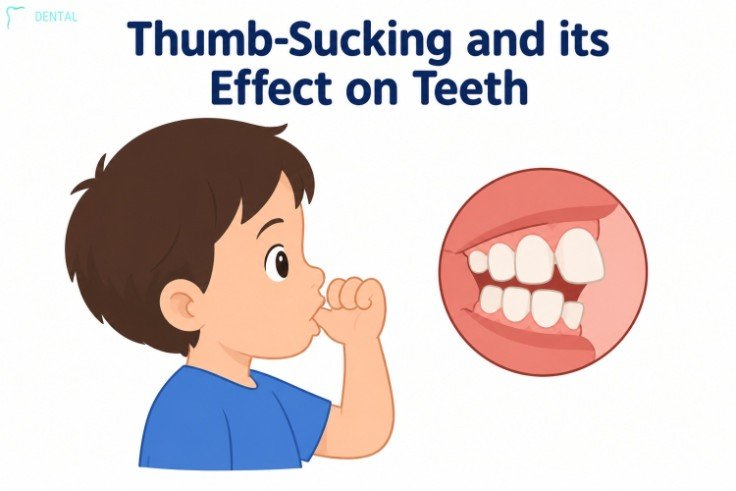

While thumb sucking may seem to be an innocent act of childhood, one that even has calming benefits for babies and helps them sleep better, as the child develops, thumb sucking becomes something more serious because of its effect on the growth of teeth and the way that the teeth meet in the mouth. What matters is not the simple act of thumb sucking but rather the frequency and intensity of sucking in children, along with the age at which it persists in the face of development of permanent teeth. This article discusses the possible impact of thumb sucking on tooth development and how pediatric dental care can help protect a child’s developing smile.
Why Do Children Suck Their Thumbs?
Thumbsucking is a natural behavior that may provide infants with security and relaxation. Thumbsucking helps infants feel better if they are sleepy, distressed, bored, or trying to fall asleep.
In most cases, thumbsucking behavior becomes extinct by itself in the course of time. For babies younger than 3–4 years old, the behavior is not very dangerous as their teeth and mouths continue to develop.
The situation is more serious if thumbsucking remains strong in children of preschool and primary school age. The key aspects for parents to consider in this case are the age of the child, the intensity of the behavior, and the condition of the teeth.
How Thumb Sucking Affects Teeth and Jaw Development
The effects of thumb sucking on teeth depend largely on the pressure placed on the teeth and surrounding tissues over time. Persistent sucking can influence the position of developing teeth and the shape of the dental arches.
Some possible changes include:
- Open bite: The upper and lower front teeth may not meet when the back teeth are closed.
- Overjet: The upper front teeth may protrude farther forward than usual.
- Changes in the upper jaw: Frequent sucking may contribute to a narrower upper dental arch in some children.
- Bite alignment problems: The upper and lower teeth may not fit together properly.
These changes do not occur in every child. The risk depends on factors such as sucking intensity, duration, and the child’s stage of dental development.
When Does Thumb Sucking Become a Concern?
Frequently, parents are faced with the choice of intervening immediately or waiting until the child outgrows the habit. As stated by the American Academy of Pediatric Dentistry, non-nutritive sucking habits should be dealt with to help children get rid of them before reaching the age of 36 months, as continuing beyond this period may result in increased chances of having some changes in a child’s teeth in connection with the emergence of permanent teeth. The problem of thumb sucking and its influence on the teeth is quite an important issue when the sucking habit continues frequently after the age of 4 or 5 or when parents notice some changes in their children’s bites.
It is necessary to pay special attention to some signs, like the protruding of front teeth, a gap between the upper and lower front teeth when biting, and some changes in the structure of the upper jaw.
How Parents Can Help Children Stop Thumb Sucking
Breaking the behavior is effective when there is positive reinforcement rather than negative. Since thumb-sucking serves as a means of calming oneself, taking away this source of comfort without any replacements will prove to be more challenging.
Some methods that parents can implement include:
- Rewarding the child for periods without thumb-sucking instead of berating him/her when he/she fails to stop.
- Determining factors that trigger the behavior and offering other ways of calming oneself.
- Using prompts along with suitable incentives for the child.
When none of the above methods work, then the pediatric dentist can provide appropriate solutions, depending on the age of the child. Bitter substances or restrictive items should not be used unless suggested by a professional. Families exploring pediatric dental care may consider providers such as Lit Dental in McKinney, Texas, for guidance on children’s oral health and developing teeth.
Conclusion
Thumb sucking in children is a common occurrence; however, thumb sucking done persistently or strongly can cause misalignment and other complications. Age is an important factor, together with how often the child sucks his or her thumb and changes in his or her bite. Through patience and proper dental consultation, parents can ensure that their child will break away from thumb sucking in a way that their teeth remain healthy. If the child continues to thumb suck after age three or four, consult the dentist.