


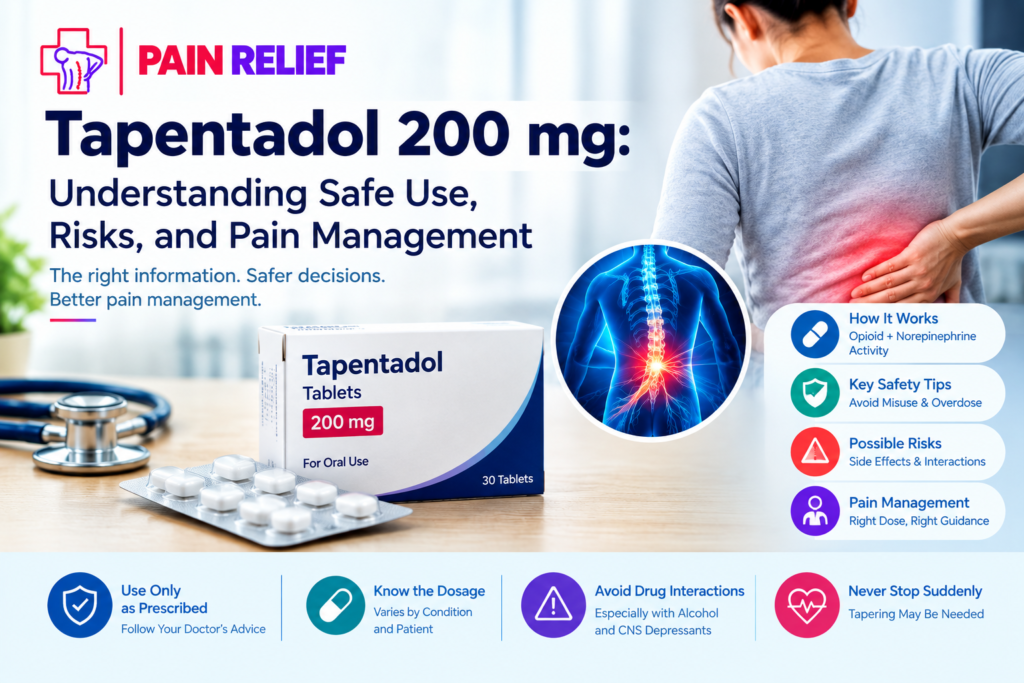

Pain management is highly individualized. While some short-term pain can be treated with non-opioid medicines and other approaches, severe pain may sometimes require prescription opioid therapy under medical supervision. Tapentadol is one such prescription opioid, but its formulation, indication, dose, and duration of treatment are important safety considerations.
What Is Tapentadol?
Tapentadol is a prescription opioid analgesic used for specific types of pain. It works through opioid activity and also affects norepinephrine signaling in the nervous system.
Because tapentadol is an opioid, it carries important risks, including misuse, addiction, overdose, and potentially life-threatening respiratory depression. FDA-approved tapentadol products are prescription medicines and should be used only according to a healthcare professional’s instructions.
Understanding Tapentadol 200 mg
A key point when discussing Tapentadol 200 mg is that the formulation matters.
Tapentadol is available in different formulations, including immediate-release and extended-release products. Extended-release tapentadol is intended for severe and persistent pain requiring ongoing opioid treatment when alternative options are inadequate; it is not simply interchangeable with an immediate-release medicine for short-term acute pain.
Therefore, patients should not assume that a 200 mg strength is appropriate for their particular type of pain.
Why Medical Supervision Matters
The appropriate opioid treatment depends on factors such as:
- The cause and severity of pain
- Previous pain treatments
- Other medicines being taken
- Medical history
- Liver and kidney function
- Previous exposure to opioids
- Individual risk factors for adverse effects
FDA guidance emphasizes using the lowest effective opioid dose for the shortest appropriate duration when an opioid is necessary for acute pain.
Patients should never increase the dose, change the dosing schedule, or switch between formulations without speaking with their prescriber.
Important Safety Considerations
Tapentadol can cause drowsiness, dizziness, nausea, vomiting, constipation, and other adverse effects. More serious risks include respiratory depression and overdose.
Combining tapentadol with alcohol, benzodiazepines, or other central-nervous-system depressants can substantially increase the risk of profound sedation, respiratory depression, coma, and death.
Patients should tell their healthcare professional about all prescription medicines, over-the-counter products, and supplements they use before starting treatment.
Never Alter an Extended-Release Tablet
Extended-release tapentadol products require particular care. FDA prescribing information warns that manipulating an extended-release tablet—such as crushing or chewing it—can cause rapid release and absorption of a potentially dangerous amount of medicine.
Patients should follow the instructions provided with their specific prescription and ask a pharmacist if they are unsure how a tablet should be taken.
What About Stopping Treatment?
People who have developed physical dependence should not abruptly stop opioid therapy without medical guidance. Rapid reduction or sudden discontinuation can cause withdrawal symptoms and uncontrolled pain.
A healthcare professional can determine whether treatment should continue and, when appropriate, develop a gradual reduction plan.
Recognizing Potentially Serious Problems
Emergency medical attention is important if someone taking tapentadol develops severe difficulty breathing, unusual inability to stay awake, or other signs of a possible overdose.
Because opioid overdose can be life-threatening, patients and caregivers should discuss overdose prevention and naloxone availability with their healthcare professional when appropriate. FDA guidance recommends considering naloxone for patients with increased overdose risk.
Responsible Pain Management
Medication is only one part of pain management. Depending on the underlying condition, healthcare professionals may also recommend physical therapy, non-opioid medicines, behavioral approaches, or treatment directed at the underlying cause of pain.
For acute pain, FDA guidance notes that many conditions require opioid treatment for only a few days, while extended-release opioids are intended for severe and persistent pain requiring longer-term opioid therapy when alternatives are inadequate.
Final Thoughts
Tapentadol can play a role in prescription pain management for appropriately selected patients, but Tapentadol 200 mg should not be treated as a one-size-fits-all pain-relief dose. The formulation and indication are particularly important, and patients should follow their individual prescription rather than relying on another person’s dosage.