




SSC Exam Preparation Tips for Beginners to Crack the Exam
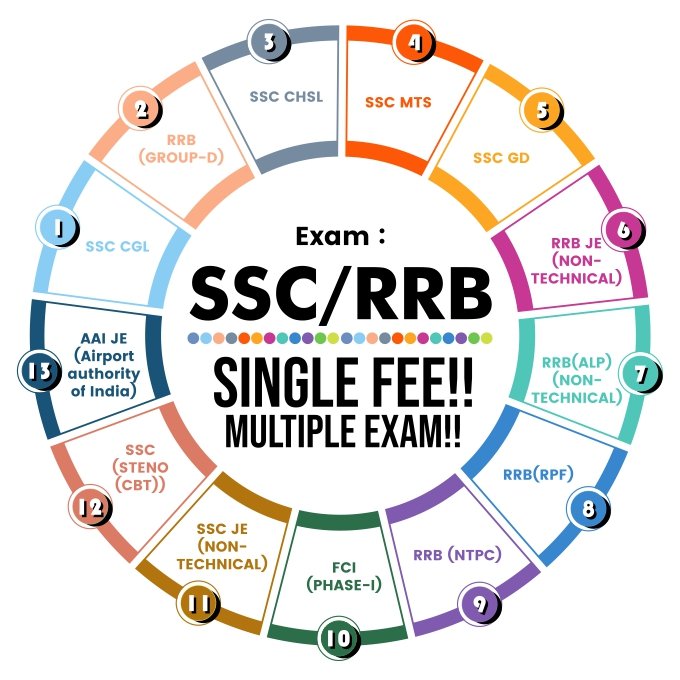
The Staff Selection Commission (SSC) conducts various competitive examinations to recruit candidates for government jobs in different departments and ministries. Exams such as SSC CGL, SSC CHSL, SSC MTS, SSC GD Constable, and SSC JE attract lakhs of aspirants every year. For beginners, preparing for the SSC Exam can seem challenging because of the extensive syllabus, competition, and time management requirements. However, with the right preparation strategy, study materials, and consistent practice, candidates can improve their performance and move closer to their goals.
Here are some useful SSC Exam preparation tips for beginners to help them build a strong foundation and prepare effectively.
1. Understand the SSC Exam Pattern
Before starting preparation, candidates should understand the exam pattern of their chosen SSC examination. Different SSC exams have different selection processes, subjects, marking schemes, and eligibility requirements.
Generally, SSC examinations include subjects such as:
- General Intelligence and Reasoning
- Quantitative Aptitude
- English Language
- General Awareness
Some examinations may also include additional stages, skill tests, physical tests, or document verification. Understanding the exam pattern helps candidates plan their preparation according to the actual requirements.
2. Check the Latest SSC Exam Syllabus
The SSC Exam syllabus is an important resource for every aspirant. Beginners should carefully review the latest syllabus of their target examination and identify the important topics in each subject.
For example, Quantitative Aptitude includes topics such as percentages, profit and loss, ratio and proportion, time and work, and simplification. Reasoning covers analogy, coding-decoding, series, classification, and puzzles.
Similarly, English preparation involves grammar, vocabulary, comprehension, and sentence correction, while General Awareness includes history, geography, science, economics, and current affairs.
Candidates should divide the syllabus into smaller sections and prepare one topic at a time.
3. Create a Realistic Study Timetable
A proper study timetable helps beginners maintain consistency and complete the syllabus within the available time. Instead of studying randomly, candidates should allocate dedicated hours to each subject.
A simple daily timetable may include:
- Quantitative Aptitude: 2 hours
- Reasoning: 1.5 hours
- English: 1 hour
- General Awareness: 1 hour
- Revision and practice: 30 minutes
Candidates can adjust these hours according to their daily schedules and preparation levels. Regular study is more effective than studying for long hours without a proper plan.
4. Choose the Right Study Materials
Selecting suitable books and study resources is another important step in SSC Exam preparation. Beginners should avoid collecting too many books because this can create confusion and make revision difficult.
Choose reliable books for Quantitative Aptitude, English, Reasoning, and General Awareness. Along with books, candidates can use online learning platforms, video lectures, practice questions, and previous year question papers.
GetExamInfo can help aspirants explore exam-related information, preparation resources, mock tests, and coaching options to support their preparation journey.
Read More: SSC JE Exam Syllabus 2026
5. Practice SSC Previous Year Question Papers
Solving SSC previous year question papers is one of the most effective preparation strategies. These papers help candidates understand the types of questions asked, frequently tested topics, difficulty level, and overall exam pattern.
Beginners should start by solving topic-wise questions before attempting complete papers. After gaining confidence, they should practise full-length previous year papers within the actual exam time limit.
Regular practice also helps candidates identify repeated question patterns and improve their problem-solving abilities.
6. Attempt SSC Mock Tests Regularly
Mock tests play an important role in improving exam performance. Beginners should start with subject-wise tests and gradually move towards full-length SSC mock tests.
Mock tests help candidates:
- Improve speed and accuracy.
- Understand time management.
- Identify weak and strong subjects.
- Reduce exam-related anxiety.
- Develop better question-solving strategies.
After attempting every mock test, analyse the results carefully. Identify incorrect answers, understand the mistakes, and revise the topics that need improvement.
7. Focus on Time Management
Time management is essential for cracking competitive examinations. Candidates must learn how to solve questions accurately within a limited time.
During practice sessions, set time limits for individual topics and gradually increase the difficulty level. Avoid spending too much time on a single difficult question. Instead, solve easier questions first and return to challenging ones if time permits.
This strategy can help beginners improve their overall efficiency during the examination.
8. Make Revision a Daily Habit
Revision is necessary to remember important concepts, formulas, grammar rules, and general knowledge facts. Beginners should prepare short notes while studying and revise them regularly.
For Quantitative Aptitude, maintain a separate notebook for formulas and shortcuts. For English, revise vocabulary and grammar rules. For General Awareness, prepare concise notes on important events and static GK topics.
Weekly revision sessions can also help candidates identify topics that require additional practice.
Read More: SSC CGL Previous Year Question Paper
9. Stay Updated with Current Affairs
General Awareness is an important section in several SSC examinations. Candidates should develop the habit of reading current affairs regularly.
Focus on national and international events, government schemes, sports, awards, important appointments, and major developments. Along with current affairs, revise static general knowledge topics such as Indian history, geography, and basic science.
Consistent preparation is more useful than trying to cover several months of current affairs at the last moment.
10. Choose the Right Coaching and Preparation Resources
Some beginners prefer self-study, while others benefit from professional guidance. Choosing the right coaching institute depends on individual learning requirements, budget, location, and preparation level.
Before selecting an institute, compare its faculty, teaching methodology, study materials, test series, doubt-clearing support, and student feedback.
Platforms like GetExamInfo help aspirants explore suitable coaching options and exam preparation resources so they can make informed decisions.
Conclusion
Cracking the SSC Exam requires proper planning, consistent practice, and regular revision. Beginners should start by understanding the exam pattern and syllabus, creating a realistic timetable, selecting reliable study materials, and solving previous year question papers. Regular SSC mock tests and performance analysis can further improve speed, accuracy, and confidence.
Most importantly, aspirants should remain patient and focused throughout their preparation journey. With the right strategy and suitable guidance, candidates can strengthen their preparation and work towards achieving their government job goals. Explore GetExamInfo to discover useful exam information, preparation resources, and coaching options for competitive examinations.


