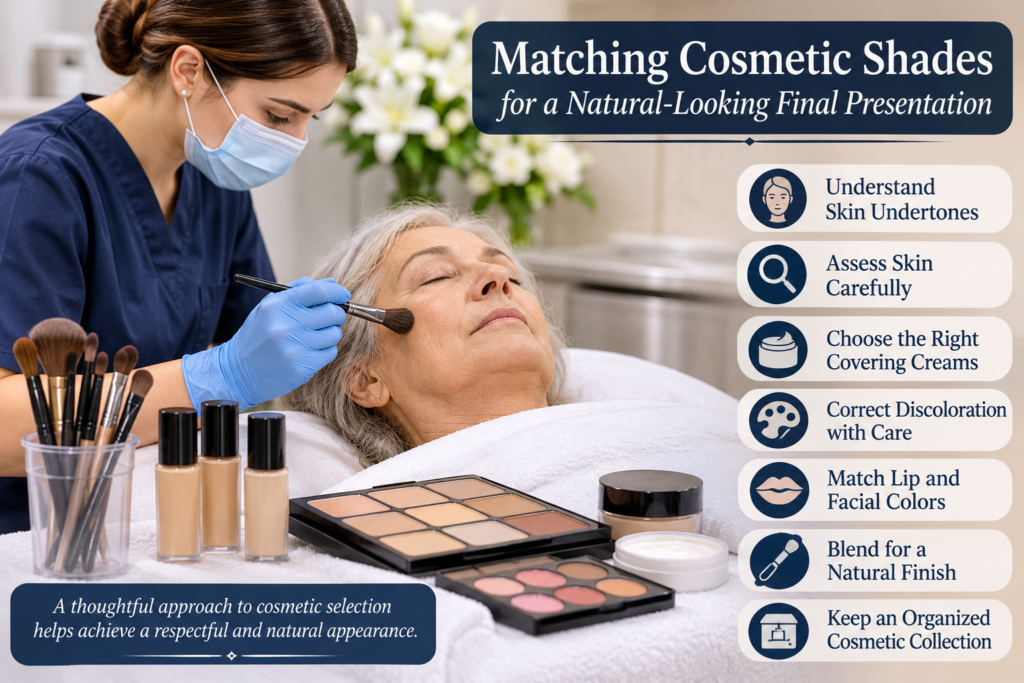

Creating a natural-looking final presentation requires attention to color, texture, and the individual characteristics of the skin. In professional funeral preparation, cosmetic shades should be selected carefully rather than applied uniformly across every area. Differences in skin tone, discoloration, and surface condition can influence how products appear under viewing conditions. Understanding these factors helps funeral professionals develop a balanced cosmetic approach that supports a respectful and natural presentation.
Selecting appropriate mortuary cosmetics involves more than finding a shade that appears suitable in its container. Professionals must consider the existing skin tone, the areas requiring correction, the coverage level, and how different products blend together. A thoughtful selection process can help reduce visible color differences and create a more consistent appearance without relying on excessive product application.
Understanding Natural Skin Undertones
Skin color is influenced by several factors, including surface tone and underlying undertones. Although two individuals may appear to have similar skin colors, their undertones can differ. Recognizing these differences can help professionals select cosmetic shades that blend more naturally.
Warm undertones may appear golden or peach-like, while cool undertones can have pink or bluish characteristics. Neutral undertones generally fall between these categories. These descriptions provide a useful starting point, but professionals should also assess the overall appearance of the skin rather than relying on a single classification.
The objective is not to change the individual’s natural characteristics. Instead, cosmetic selection should support a balanced appearance that respects the person’s familiar features.
Assessing Skin Before Selecting Products
A careful assessment should take place before cosmetic application begins. Professionals can evaluate the skin’s existing color, visible discoloration, dryness, texture, and any areas that may require additional coverage.
Different facial areas may have different needs. The forehead, cheeks, chin, eyelids, and lips can vary in tone, so selecting one shade for the entire face may produce an uneven result.
Lighting also affects color perception. A shade that appears suitable under one type of light may look different under another. Where practical, professionals should assess colors under appropriate viewing conditions and make adjustments gradually.
This initial evaluation helps establish a clear plan before products are applied.
Choosing Suitable Covering Creams
Covering creams can help address visible discoloration and create a more even-looking surface. However, the best product depends on the condition of the skin and the level of coverage required.
A product that is too light may create an unnatural or washed-out appearance. A shade that is too dark can make treated areas stand out from the surrounding skin. Choosing a suitable match helps reduce these differences.
Coverage should also be considered alongside color. A highly pigmented product may be useful for particular areas, while lighter coverage may be more appropriate elsewhere. Applying products selectively can preserve natural-looking variation instead of creating a uniform, artificial finish.
Professionals should follow manufacturer instructions and established restorative practices when selecting and applying covering products.
Correcting Discoloration Carefully
Discoloration can present a challenge during cosmetic restoration. Areas affected by redness, uneven pigmentation, or other visible changes may require targeted color correction before the final shade is applied.
Color correction works best when approached carefully. Rather than covering every concern with a thick layer of foundation, professionals can assess the specific area and select a suitable corrective shade where appropriate.
The corrective product should blend with the surrounding skin and the products applied afterward. Excessive layering may create differences in texture or coverage, so gradual application and regular assessment are important.
The purpose of correction is to create visual balance while maintaining a natural overall appearance.
Matching Lip and Facial Colors
Lip color can significantly influence the overall presentation. A shade that contrasts too strongly with the surrounding skin may appear disconnected from the rest of the face. Conversely, a carefully selected color can complement the complexion and support a balanced result.
Professionals should consider the individual’s known appearance, available reference information, and the intended presentation when choosing lip products. The same principle applies to other facial details, including cheeks and eyebrows.
Colors should work together rather than compete for attention. Subtle adjustments are often preferable to applying strong shades that dominate the overall appearance.
Understanding Blending and Product Compatibility
Even a well-chosen shade can look unnatural if it is not blended appropriately. Visible boundaries between treated and untreated areas can make cosmetic work appear uneven.
Blending should be gradual, with attention given to transitions around the hairline, jawline, and other facial contours. Professionals should also consider how primers, covering creams, color products, and finishing products interact.
Not every cosmetic product is designed to work identically with every other formulation. Following manufacturer guidance can help professionals choose compatible products and avoid application problems.
A final review under suitable lighting can reveal areas where additional blending or minor correction may improve the result.
Building an Organized Cosmetic Collection
Maintaining an organized selection of shades can make restorative work more manageable. A professional collection may include covering creams, color products, primers, and specialized materials for different presentation needs.
Products should be labeled clearly, stored according to manufacturer instructions, and reviewed regularly. An organized collection allows professionals to identify available shades quickly and maintain better control over inventory.
Staff training is also valuable. Understanding product characteristics and application techniques can improve consistency across a preparation team.
Conclusion
Matching cosmetic shades is an important part of professional restorative preparation. By assessing skin tone, understanding undertones, choosing suitable covering products, and blending colors carefully, funeral professionals can work toward a balanced and natural-looking presentation.
The most effective approach combines thoughtful product selection with careful observation and established professional practices. Attention to individual characteristics helps ensure that cosmetic restoration remains respectful, controlled, and appropriate to each case.