



Understanding Which Leads Deserve Attention First
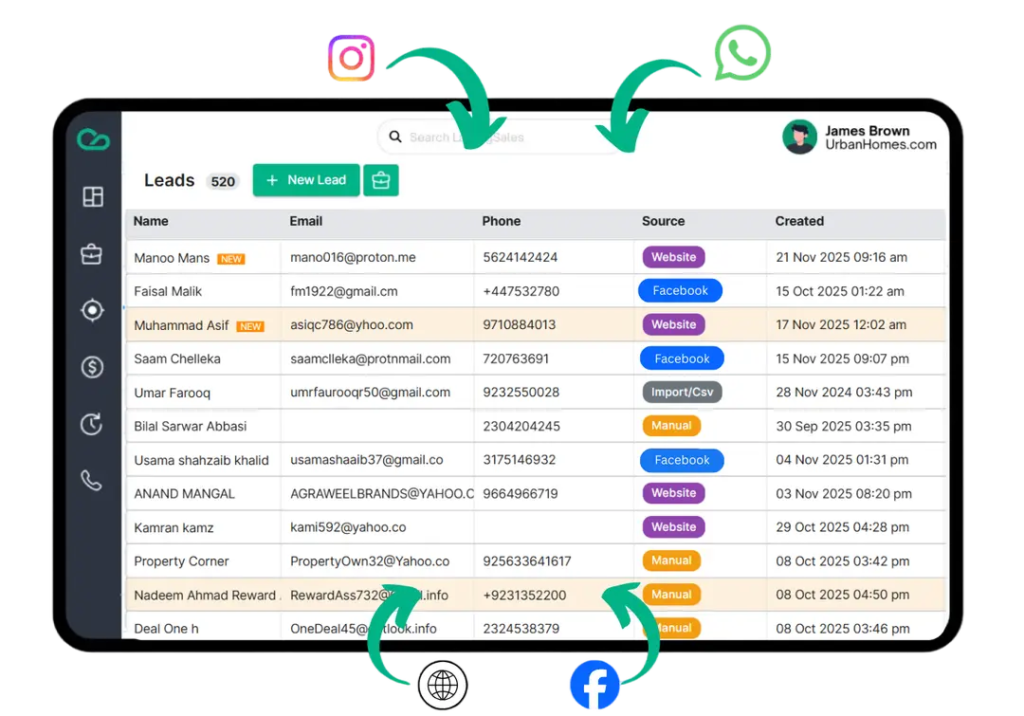
AI lead qualification is changing how service businesses identify promising prospects and organise their sales activities. Companies often receive enquiries from websites, social media, advertising campaigns, messaging platforms, and referrals. However, not every person who submits an enquiry is ready to purchase a service.
Some prospects need basic information, while others are comparing providers or preparing to make a decision. Treating every enquiry in exactly the same way can consume valuable time and delay responses to potential customers with immediate requirements.
Intelligent qualification helps businesses collect relevant information, understand customer needs, and organise prospects according to their suitability and level of interest. This allows sales representatives to approach conversations with better context and use their time more effectively.
The Challenge of Managing Growing Enquiry Volumes
As businesses expand their marketing activities, the number of incoming leads can increase quickly. Sales teams may find themselves answering similar questions, reviewing incomplete contact details, and manually deciding which enquiries require attention first.
These repetitive tasks can reduce the time available for meaningful conversations.
An AI-assisted process can help collect initial information and organise incoming enquiries. Depending on its configuration, it may ask relevant questions, identify missing details, and summarise the prospect’s requirements for the sales team.
Human representatives can then focus on understanding the customer’s situation and explaining suitable solutions.
Moving Beyond Basic Contact Forms
Traditional contact forms usually collect a limited amount of information, such as a name, email address, telephone number, and message. Although these details are useful, they may not explain what the prospect actually needs.
Conversational qualification can gather additional context through a series of relevant questions.
For example, a service provider might ask about the type of service required, the customer’s location, their expected timeframe, and their main objective. The answers can help the business determine the appropriate next step.
This creates a more informative starting point for the sales conversation.
Using Customer Information to Guide Sales Decisions
Lead qualification becomes more useful when collected information is organised consistently. Without a central record, details from different conversations may remain scattered across emails, spreadsheets, and messaging applications.
A connected system can keep customer information, enquiry history, qualification details, and sales activities together.
Identifying Important Qualification Signals
Businesses can define criteria that indicate whether an enquiry matches their services. These criteria will vary depending on the industry and the type of customer they serve.
Common qualification signals include:
- Whether the prospect needs a service the business provides.
- The customer’s location or service area.
- The expected purchase timeframe.
- The requirements and goals described by the prospect.
- Whether the customer is ready for a consultation or quotation.
- The completeness of the information supplied.
AI can help interpret these details and organise leads according to the business’s chosen criteria. However, qualification results should be reviewed when information is incomplete or the prospect’s circumstances are unclear.
Making Lead Prioritisation More Practical
Not every lead needs the same immediate action. A prospect requesting a consultation may require a prompt response, while someone researching general options may benefit from educational information.
A qualification system can help group leads by urgency, suitability, or readiness to proceed. This gives sales teams a clearer starting point for deciding what to handle first.
The purpose is to support informed decisions rather than automatically dismiss prospects who have not yet provided enough information.
How AI CRM for Service Businesses Connects Qualification With Sales
An AI CRM for service businesses brings lead information, customer records, sales pipelines, and automated workflows into a connected environment. When qualification is integrated with CRM processes, the information collected during an initial conversation can support the next stages of the sales journey.
For example, a qualified prospect can be assigned to a sales representative, placed into the appropriate pipeline stage, and given a follow-up task. The representative can review the qualification details before making contact.
This reduces the need to repeat questions and helps maintain continuity between automated engagement and personal communication.
Keeping Every Lead’s Progress Visible
A CRM pipeline allows teams to monitor opportunities as they move through different stages, from initial enquiry to consultation, proposal, negotiation, and final outcome.
When qualification information is connected to these stages, sales representatives can better understand why a prospect is progressing or waiting.
Managers can also review whether leads are being contacted, whether follow-ups are overdue, and where opportunities tend to slow down.
Automating Routine Administrative Tasks
AI and CRM automation can support several repetitive activities, including:
- Sending notifications when new enquiries arrive.
- Assigning leads to the appropriate team member.
- Creating reminders for future contact.
- Updating lead records and workflow statuses.
- Organising conversation summaries.
- Flagging enquiries that need human review.
The exact capabilities depend on the software and its configuration. Businesses should establish clear workflows so that automation supports the team’s actual sales process.
Improving Customer Experience Through Relevant Communication
Qualification should help businesses understand prospects, not make every interaction feel like an interrogation.
Questions should be relevant, concise, and appropriate to the service being offered. Customers should also have a clear way to request human assistance when their needs are complicated or they prefer speaking with a person.
Responding With Better Context
When a sales representative receives a qualified lead, they should be able to see the prospect’s requirements and previous interactions.
This allows the representative to begin with the information already available instead of asking the customer to explain everything again.
For instance, an education consultant could review a student’s intended course and preferred start date before arranging a consultation. A marketing agency could examine the prospect’s requested services before preparing a discovery call.
Better context can make conversations more relevant and productive.
Maintaining Human Oversight
AI systems can misunderstand ambiguous answers, overlook important context, or classify a lead incorrectly. Businesses should therefore allow representatives to correct records, review uncertain results, and override automated classifications.
Sensitive customer information should also be handled responsibly, with appropriate access controls and clear data-handling practices.
A balanced approach combines automation for routine tasks with human judgement for complex decisions and relationship-building.
Measuring the Results of Qualification Workflows
Businesses need to understand whether their qualification process is actually helping their sales operation.
Useful metrics can include the percentage of enquiries that become qualified leads, the time taken to respond, the number of consultations booked, the proportion of opportunities progressing to proposals, and the eventual conversion rate.
These measurements can reveal where improvements may be needed.
For example, a high volume of qualified leads but few booked consultations could indicate a delay in follow-up or a mismatch between customer expectations and the service offered.
Reviewing these patterns helps businesses improve their processes using recorded activity rather than assumptions.
Applying Intelligent CRM to Everyday Service Operations
LastingSales combines lead management, sales pipelines, follow-up workflows, communication features, mobile CRM access, and AI-powered lead engagement through its Leadly agent.
For service businesses, these capabilities can help organise incoming enquiries, gather useful prospect information, notify sales teams, and manage opportunities through a more structured process.
By connecting initial engagement with lead records and follow-up activities, businesses can maintain better visibility from the first enquiry through to the next sales action.
Conclusion: Turning Enquiries Into Organised Opportunities
Intelligent qualification can help service businesses understand customer requirements, reduce repetitive administrative work, and direct sales attention more effectively. Its value increases when qualification information is connected to customer records, pipelines, and follow-up workflows.
Businesses should establish clear qualification criteria, review uncertain results, and maintain human oversight throughout the process. With these foundations in place, AI-supported CRM systems can help sales teams manage enquiries more consistently and create a more informed customer journey.