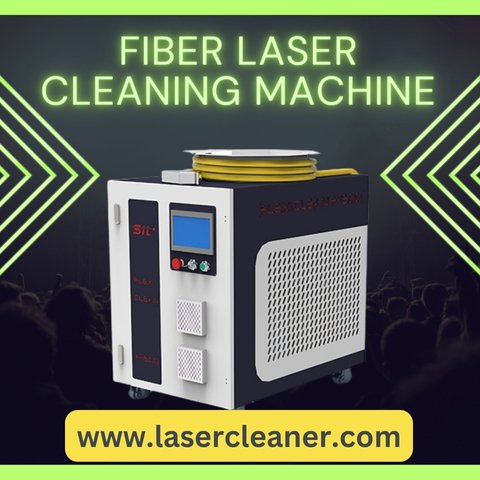

Industrial cleaning has evolved with the development of advanced laser technology. Traditional cleaning methods often involve chemicals, abrasive materials, or manual processes that require additional preparation. Today, laser-based solutions are becoming increasingly popular in manufacturing, automotive, metalworking, and other industrial sectors. A fiber laser cleaning machine offers a modern approach to removing rust, paint, oil, and other unwanted materials from different surfaces.
What Is a Fiber Laser Cleaning Machine?
A fiber laser cleaning machine is an industrial device that uses a concentrated laser beam to remove contaminants from a material’s surface. The laser energy interacts with unwanted substances, helping separate them from the underlying material without relying on chemical cleaning agents or abrasive blasting.
This technology is commonly used on metal surfaces, including stainless steel, carbon steel, aluminum, and various industrial components. Depending on the application, operators can select suitable laser power and cleaning parameters to achieve the desired results.
How Does Laser Cleaning Technology Work?
The cleaning process begins when the laser source generates a focused beam of light. This beam is directed toward the surface through an optical system and scanning head. When the laser interacts with rust, paint, dirt, or other contaminants, the material absorbs energy and is removed through processes such as ablation.
The cleaning parameters depend on the material type, contamination level, surface condition, and required cleaning depth. Proper adjustment helps control the process and protect the underlying material.
Operators should also use suitable extraction systems to manage dust and particles produced during cleaning.
Common Industrial Applications
Laser cleaning technology is used across several industries because different manufacturing processes require clean and properly prepared surfaces.
1. Rust Removal
Metal components exposed to moisture and environmental conditions can develop rust over time. Laser cleaning helps remove oxidation from steel structures, machinery parts, metal tools, and industrial equipment before maintenance or further processing.
2. Paint and Coating Removal
Old paint and protective coatings sometimes need to be removed before repainting, welding, or surface treatment. Laser cleaning can target unwanted coatings on metal components while allowing operators to control the cleaning parameters.
3. Oil and Grease Cleaning
Manufacturing processes often leave oil, grease, and other residues on metal parts. Laser cleaning can help prepare these surfaces for welding, bonding, assembly, and other production operations.
4. Mold and Equipment Maintenance
Industrial molds and production equipment require regular cleaning to maintain manufacturing quality. Laser technology can be used to remove accumulated residues from selected surfaces without traditional abrasive cleaning processes.
Choosing the Right Equipment for Your Business
Selecting suitable laser cleaning equipment requires understanding the actual cleaning requirements. Businesses should consider the type of material, thickness of contamination, surface dimensions, and cleaning frequency.
Laser power is another important factor. Different applications may require different power levels depending on the cleaning speed and contamination thickness. Working distance, scanning width, cooling arrangements, and operating environment should also be considered.
Before purchasing a machine, businesses should discuss their application requirements with the manufacturer and request a cleaning demonstration using similar materials.
Operating and Maintenance Considerations
Proper operation is essential for consistent cleaning results. Operators should follow the manufacturer’s instructions and receive appropriate training before using the equipment.
Laser safety is particularly important. Industrial cleaning lasers can cause serious eye and skin injuries. A suitable laser-controlled work area, wavelength-rated protective eyewear, safety interlocks, and appropriate ventilation or fume extraction should be provided.
Regular inspection of optical components, protective lenses, cables, and cooling systems can also help maintain reliable operation over time.
The Growing Role of Laser Cleaning in Manufacturing
As industrial manufacturers look for more controlled surface preparation methods, laser cleaning continues to attract attention. Its applications extend from automotive production and shipbuilding to aerospace maintenance, metal fabrication, and machinery restoration.
With suitable equipment and correctly configured operating parameters, companies can integrate laser cleaning into their existing production workflows. This technology is becoming an important part of modern industrial surface treatment.
Final Thoughts
Laser cleaning is changing how industries approach rust removal, coating removal, and surface preparation. A fiber laser cleaning machine provides a technology-based solution for businesses that need controlled and precise cleaning processes. By understanding application requirements, selecting appropriate equipment, and following proper operating procedures, manufacturers can incorporate laser cleaning into their daily operations and support consistent production standards.