



Facility managers and business owners face a persistent challenge: finding a flooring solution that survives heavy foot traffic, chemical spills, and constant equipment movement without requiring frequent, costly repairs. Commercial polyaspartic coatings have emerged as the answer for an increasing number of warehouses, retail spaces, manufacturing plants, and commercial garages, and the reasons behind that shift come down to genuine performance advantages over older coating technologies.
What Makes Polyaspartic Coatings Different
Polyaspartic coatings belong to the polyurea family of coatings but bring a few critical advantages that set them apart from traditional epoxy systems. The chemistry behind polyaspartics allows for faster curing times, better UV stability, and greater flexibility during application—differences that translate directly into real-world benefits for commercial property owners.
Unlike epoxy, which can take 24 to 72 hours to cure fully, polyaspartic coatings typically cure within hours. This dramatically reduces the downtime a business faces during installation, which matters enormously for facilities that can’t afford to shut down operations for days at a time.
Key Benefits for Commercial Applications
Rapid installation and minimal downtime. Because polyaspartic coatings cure so quickly, contractors can often complete an entire installation—including multiple coats within a single day. Businesses that can’t tolerate extended closures, such as retail stores, restaurants, or active warehouses, benefit enormously from this compressed timeline.
Superior durability under heavy use. Commercial environments subject flooring to forklift traffic, dropped tools, chemical exposure, and constant foot traffic. Polyaspartic coatings resist abrasion, impact, and chemical staining far better than standard epoxy, which means fewer repairs and a longer functional lifespan for the floor.
UV stability that prevents yellowing. Epoxy coatings are notorious for yellowing or degrading when exposed to sunlight over time. Polyaspartic coatings maintain their color and clarity even under direct UV exposure, making them a strong choice for loading docks, garages with windows, or any space with significant natural light.
Flexibility across temperature ranges. Polyaspartic coatings can be applied across a wider temperature range than epoxy, which often requires specific climate conditions to cure properly. This flexibility gives contractors more scheduling options and reduces weather-related installation delays.
Slip resistance options for safety compliance. Many commercial facilities require slip-resistant flooring to meet safety regulations and reduce liability. Polyaspartic systems can incorporate aggregate additives that create textured, slip-resistant surfaces without sacrificing the coating’s durability or appearance.
Common Commercial Applications
Polyaspartic coatings work across a wide range of commercial settings, each benefiting from the coating’s specific strengths.
Warehouses and distribution centers rely on flooring that withstands constant forklift traffic and heavy pallet loads without cracking or peeling. Polyaspartic coatings hold up under this kind of continuous mechanical stress far better than many alternative systems.
Manufacturing facilities often deal with chemical spills, oil, and other substances that can degrade lesser coatings quickly. The chemical resistance built into polyaspartic formulations protects the underlying concrete and reduces long-term maintenance costs.
Retail and hospitality spaces benefit from the fast cure time, since these businesses typically can’t afford extended closures for flooring work. A polyaspartic installation completed overnight allows a store or restaurant to reopen the next morning with minimal disruption.
Commercial parking garages face constant exposure to vehicle traffic, de-icing chemicals, and UV light. Polyaspartic coatings handle all three factors well, which explains why they’ve become increasingly popular for this application specifically.
Healthcare and laboratory facilities require flooring that resists harsh cleaning chemicals and maintains a sanitary, seamless surface. Polyaspartic coatings meet these requirements while offering the durability needed for high-traffic clinical environments.
Comparing Polyaspartic to Epoxy and Polyurea
Business owners evaluating flooring options often compare polyaspartic coatings against epoxy and standard polyurea systems. Epoxy remains a lower-cost option upfront, but it typically requires longer cure times, shows more wear over time, and tends to yellow under UV exposure. Standard polyurea cures even faster than polyaspartic in some formulations, but it can be more difficult to apply correctly, requiring specialized equipment and experienced installers.
Polyaspartic coatings often represent a middle ground that captures many of the advantages of both systems—reasonably fast curing, strong durability, UV stability, and more forgiving application conditions than pure polyurea. For many commercial applications, this balance makes polyaspartic the more practical long-term choice, even though the upfront cost typically runs higher than basic epoxy.
What to Consider Before Installation
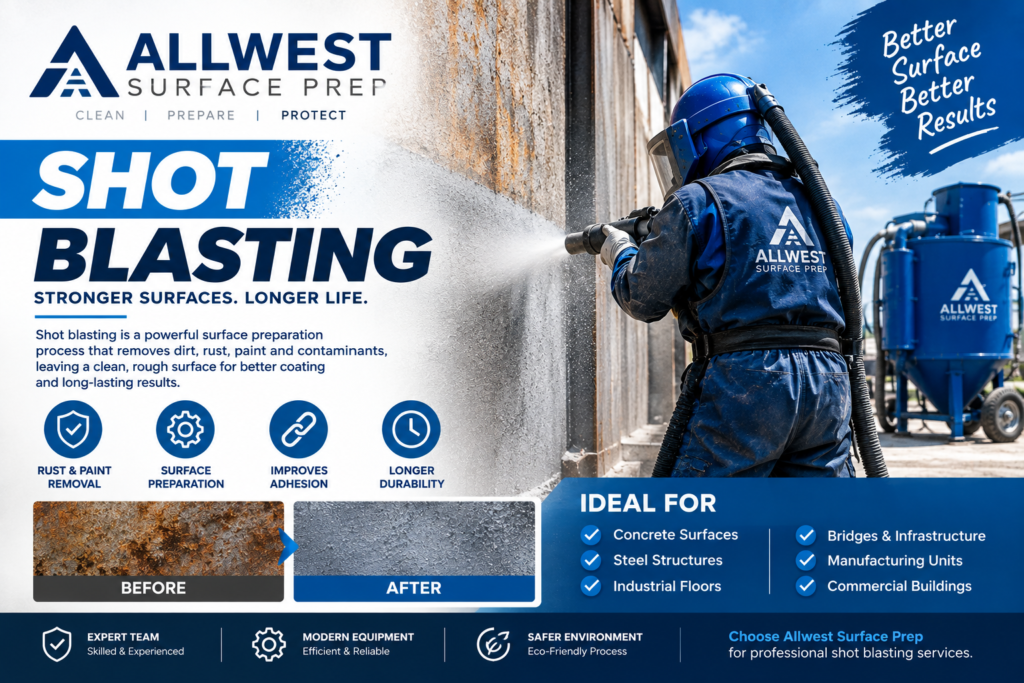
Before committing to a polyaspartic coating system, facility owners should evaluate a few key factors. Surface preparation matters enormously regardless of which coating system you choose—concrete must be properly cleaned, profiled, and free of moisture issues, or even the best coating will fail prematurely. Working with an experienced commercial flooring contractor who understands proper surface prep and application techniques makes a significant difference in how long the coating actually performs as expected.
Facility owners should also consider expected foot and vehicle traffic, chemical exposure specific to their industry, and whether slip resistance is a regulatory requirement for their space. These factors influence which specific polyaspartic formulation and additive combination will perform best for a given facility.
Making the Right Flooring Investment
All westsurface prep Commercial polyaspartic coatings offer a combination of speed, durability, and long-term value that makes them an increasingly popular choice for businesses that can’t afford flooring downtime or frequent repairs. While the upfront cost may exceed basic epoxy systems, the reduced maintenance, faster installation, and extended lifespan often make polyaspartic coatings the more cost-effective choice over the long run.
If you’re evaluating flooring options for a commercial facility, consulting with an experienced coatings contractor can help determine whether polyaspartic is the right fit for your specific traffic patterns, chemical exposure, and budget requirements.