



Success is often measured through visible outcomes: professional achievement, financial growth, organizational expansion, influence, or the ability to consistently perform at a high level.
But visible success does not always reveal what is happening underneath.
For many accomplished individuals and organizations, the challenge is not a shortage of ambition, intelligence, or effort. The deeper challenge is understanding the structures that influence outcomes—governance, incentives, leadership models, economic systems, institutional relationships, and long-term decision-making.
This is the idea behind structural clarity.
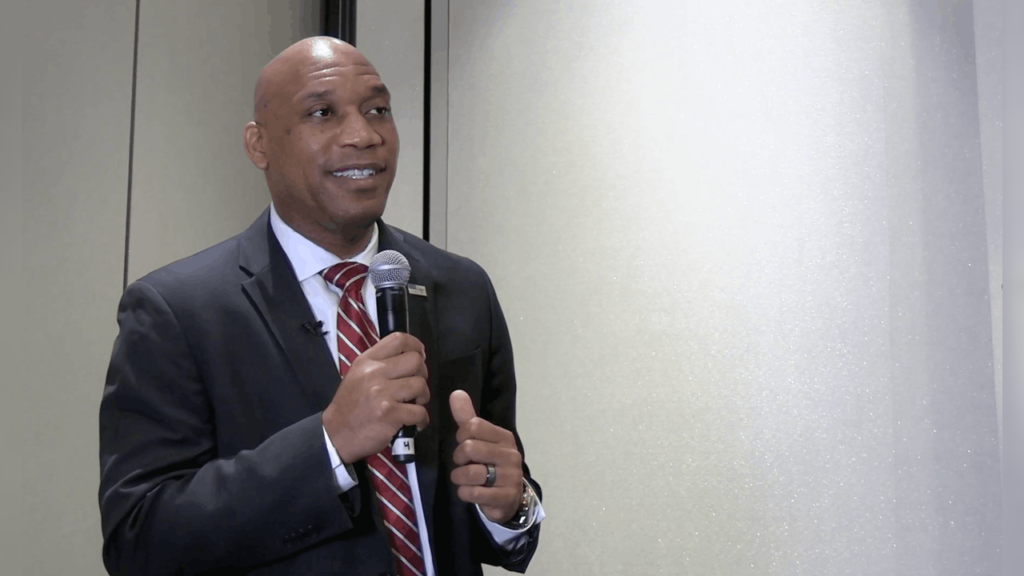
Antomius Wise approaches leadership and executive education from this perspective, helping decision-makers examine the systems beneath performance and understand how those systems can influence outcomes over time.
Performance Is Only Part of the Picture
High performers are accustomed to solving problems through action. They set goals, develop strategies, make decisions, and execute.
That approach can produce exceptional results. However, even highly capable people can encounter limitations when they focus exclusively on individual performance while overlooking the environment in which their decisions operate.
Consider an executive working within a complicated governance structure. The executive may have the experience and authority to make strong decisions, yet conflicting incentives or unclear accountability can undermine those decisions.
A founder may build a profitable company but eventually face questions about succession, institutional continuity, governance, and long-term ownership.
A successful professional may accumulate significant resources but have limited time to consider how those resources interact with family responsibilities, philanthropic goals, or broader economic structures.
In each situation, the issue may not be capability.
It may be structural visibility.
Understanding the architecture surrounding a decision can reveal opportunities, constraints, and risks that are difficult to recognize when attention remains focused only on immediate performance.
What Is Structural Clarity?
Structural clarity is the ability to understand how different systems connect and influence outcomes.
It involves looking beyond individual decisions and examining the frameworks in which those decisions are made.
That can include:
- Leadership and organizational structure
- Governance and accountability
- Economic systems and incentives
- Institutional relationships
- Capital and resource allocation
- Strategic philanthropy
- Family and generational legacy
- Long-term organizational continuity
The purpose is not to complicate decision-making. It is to make the underlying environment easier to understand.
When leaders can see how incentives, governance, capital, and institutional structures interact, they can approach important decisions with a broader perspective.
A Different Approach to Executive Education
Traditional speaking engagements often focus on motivation, leadership techniques, or personal achievement.
Structural education takes a different approach.
Instead of asking only how individuals can perform better, it asks how leaders can better understand the systems in which they operate.
That distinction matters for organizations dealing with complex decisions.
Executive teams may need to examine governance and incentive alignment. Founders may need to think about how an organization can evolve beyond its original leadership. Advisors may want their clients to develop a deeper understanding of the structures surrounding wealth and legacy.
These conversations are less about delivering simple answers and more about creating the framework for better questions.
Antomius Wise works within this space as an institutional systems speaker and executive education strategist, bringing conversations about leadership, governance, economics, and institutional thinking into executive environments.
Who Are These Conversations For?
Structural thinking can be relevant across several high-responsibility environments.
Wealth Advisors and Trust Networks
Professionals working with significant wealth often operate at the intersection of financial decisions, family governance, fiduciary responsibility, and long-term planning.
Educational discussions can complement these relationships by helping individuals and families understand the broader structures influencing their decisions.
Executive Leadership Teams
Organizations depend on more than strong individual leaders.
Effective governance, aligned incentives, accountability, and institutional discipline can influence whether an organization remains effective as it grows.
Private executive briefings can provide leadership teams with an opportunity to examine these issues away from the immediate pressures of daily operations.
Physicians and High-Income Professionals
Professional success can bring increased responsibility.
Physicians, executives, and other high-income professionals may be responsible for organizations, employees, families, communities, or significant resources.
Structural education offers a way to step back from those responsibilities and examine the systems surrounding them.
Entrepreneurs and Founders
Entrepreneurship frequently begins with a product, service, or idea.
Institution building requires a broader perspective.
As organizations mature, questions about governance, leadership succession, organizational incentives, capital, and continuity become increasingly important.
Founders who think beyond the initial stage of growth can begin considering not only what they are building, but what kind of institution they want it to become.
Universities and Associations
Universities and professional associations provide environments for serious conversations about leadership, economics, institutions, and social impact.
Keynotes, symposia, and educational programs can introduce these ideas to audiences interested in understanding the forces that influence organizations and communities.
Civic and Philanthropic Leaders
Civic and philanthropic leaders frequently operate across multiple systems at once.
They may be balancing mission, capital, community needs, institutional capacity, and long-term impact.
A systems perspective can help connect those elements rather than treating them as isolated issues.
The Role of Private Executive Briefings
Some subjects require a different setting.
Private executive briefings create space for focused conversations among leaders, advisors, founders, philanthropic organizations, and other decision-makers.
These sessions can explore topics including governance discipline, economic systems, strategic philanthropy, institutional thinking, incentive alignment, and family legacy education.
The emphasis is deliberately educational.
Instead of presenting a one-size-fits-all formula, the discussion focuses on helping participants recognize the structures that influence their particular environments.
This can be especially valuable when decisions involve multiple stakeholders, competing incentives, or long-term consequences.
Strategic Philanthropy Beyond Giving
Philanthropy is frequently measured by the amount of money contributed.
But meaningful long-term impact involves more than the size of a contribution.
Donors and founders increasingly have reason to consider how philanthropic organizations are governed, how resources are deployed, how institutions build capacity, and whether initiatives can produce sustainable economic and community outcomes.
A systems perspective changes the conversation.
Instead of asking only, “How much should we give?”, leaders can also ask:
What structure will create the greatest lasting impact?
How will the initiative be governed?
What incentives will shape participation?
What institutional capacity is required?
How might the effort contribute to long-term community development?
These questions help make the full scope of philanthropic impact more visible.
Education Without a Transactional Agenda
Structural clarity is fundamentally educational.
The purpose is not to push a particular transaction or predetermined solution. Instead, it is to provide leaders with concepts and frameworks they can use when evaluating complex decisions.
That distinction is important.
Good executive education does not replace advisors, fiduciaries, boards, or institutional leadership. It can complement those relationships by giving decision-makers a stronger conceptual foundation from which to engage them.
The objective is greater understanding.
From Individual Success to Institutional Impact
Individual achievement can be powerful, but lasting influence often depends on what happens beyond the individual.
A leader eventually has to consider the organization.
A founder must consider the institution.
A successful family must consider continuity and legacy.
A philanthropist must consider long-term impact.
An advisor must consider how clients understand the structures surrounding their decisions.
At each stage, structural thinking becomes increasingly important.
The central question is no longer simply how to achieve more.
It becomes how the systems surrounding success can be understood, strengthened, and aligned with long-term objectives.
Making the Invisible Visible
The most influential forces within an organization or economy are not always obvious.
Governance can shape decisions before they are made. Incentives can influence behavior without being explicitly discussed. Economic structures can create advantages or constraints that individuals experience without fully understanding their origins.
Structural clarity brings those relationships into view.
For leaders, founders, advisors, professionals, universities, philanthropic organizations, and families thinking about the future, that perspective can create a more informed foundation for decision-making.
Antomius Wise’s work centers on these conversations—bringing institutional systems, executive education, governance, economic thinking, and strategic philanthropy into a framework designed for people operating where capital, leadership, governance, and legacy intersect.
Because high performance may create success.
But understanding the structures behind that success can help determine whether it becomes durable, transferable, and capable of creating impact far beyond the individual.