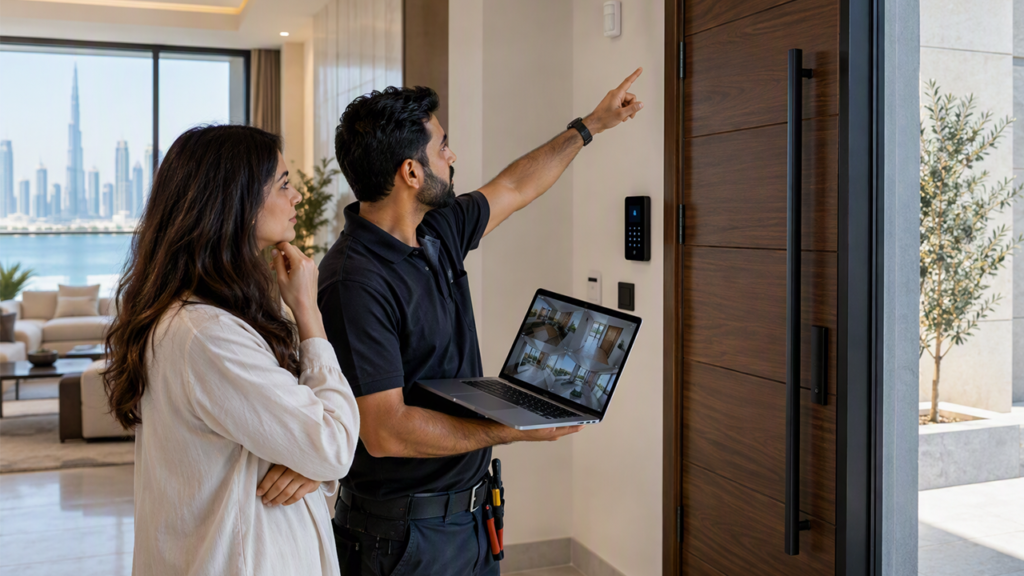

Adding smart technology to an existing home does not always require major changes or a complete renovation. Homeowners can improve their daily routines by adding smart lights, security cameras, smart locks, curtains, and temperature controls. A Smart home Dubai setup can start with a few useful devices and grow over time. The best approach is to understand the existing home, choose suitable devices, and check how they work with each other before installation.
1. Check Your Existing Home Setup
Before adding smart devices, take some time to understand your current home setup. Check the electrical wiring, Wi-Fi connection, lighting points, switches, and other existing systems. These details can help you decide which devices are suitable for your home.
For example, some smart switches need a neutral wire, while others may work without one. Older homes may also need small electrical changes before certain devices can be installed.
It is also useful to check the Wi-Fi signal in different rooms. A weak connection can affect how smart devices work. If the signal does not reach every area, you may need a Wi-Fi extender or a mesh network.
2. Start With Smart Lighting
Smart lighting is one of the easiest ways to add technology to an existing home. You can replace regular bulbs with smart bulbs or install smart switches to control existing lights.
These devices allow you to turn lights on or off using a mobile phone, voice commands, or automatic schedules. For example, you can set bedroom lights to switch off at a particular time or arrange for living room lights to turn on in the evening.
You do not need to change every light at once. Start with rooms that you use most often, such as the living room, bedroom, and kitchen.
Before buying smart bulbs or switches, check their compatibility with your existing fittings and electrical system.
3. Add Smart Temperature Controls
Temperature control is another useful area to consider, especially in Dubai, where air conditioning is important throughout much of the year.
A compatible smart thermostat can help control indoor temperatures according to your daily routine. You may be able to adjust the temperature through an app instead of using the regular control panel.
Some systems also allow you to create schedules. For example, you can set different temperatures for the morning, afternoon, and night.
However, not every air conditioning system supports the same smart controls. Check the model and control system of your existing AC before purchasing a smart thermostat. This can help prevent connection and installation problems.
4. Improve Home Security With Smart Devices
Existing homes can also benefit from smart security devices. You can add smart cameras, video doorbells, motion sensors, and door or window sensors without changing the entire security system.
Smart cameras allow homeowners to check selected areas through a mobile app. Some models also send alerts when they detect movement. Video doorbells can show who is standing outside the entrance and allow communication through a phone.
Door and window sensors can provide alerts when an entry point is opened. These devices can be useful when family members are away from home.
Before installing cameras, consider their location, internet connection, storage options, and privacy settings. Place them where they provide useful coverage without recording private areas.
5. Choose Smart Curtains and Blinds
Smart curtains are another option for homeowners who want to update their existing rooms. Motorised curtain systems allow you to open and close curtains using a remote control, mobile app, or scheduled setting.
For example, you can arrange for bedroom curtains to open in the morning and close in the evening. This can make daily routines easier without requiring manual operation.
Some smart curtain motors can be fitted to existing curtain tracks, while others may need new tracks or minor adjustments.
Before choosing a product, measure your windows and check the weight of the curtains. Also, confirm whether the motor supports your preferred control method.
6. Check Device Compatibility Before Buying
One important step when upgrading an existing home is checking whether different devices can work together.
Not all smart home products use the same communication technology or control platform. Some use Wi-Fi, while others use Zigbee, Bluetooth, or other wireless connections.
If you buy devices without checking compatibility, you may end up using separate apps for different functions. This can make daily control more difficult.
Try to select products that support the same smart home platform or can connect through a suitable central hub. Also, check whether the devices support voice assistants if you want to use voice commands.
Planning compatibility before purchasing can save time and avoid unnecessary expenses later.
7. Consider the Installation Requirements
Some smart devices are simple to install, while others need professional support. Smart bulbs and plug-in devices may only require basic setup. However, smart switches, curtain motors, thermostats, and integrated security systems may need electrical work or technical configuration.
Before installation, check the manufacturer’s instructions and safety requirements. Electrical connections should be handled by a qualified professional.
If you are planning to connect lighting, AC, curtains, and security controls, consider how these systems will communicate with each other. A clear installation plan can help avoid repeated changes.
8. Expand the System Step by Step
There is no need to install every smart feature at the same time. A gradual approach allows homeowners to understand how the technology works and decide which features are most useful.
You can begin with smart lighting and security cameras. Later, you may add temperature controls, smart curtains, motion sensors, and other connected devices.
Keep your future requirements in mind when selecting the first devices. Choosing compatible products can make it easier to expand the system without replacing everything.
The cost of an upgrade will depend on the number of devices, wiring requirements, installation work, and level of integration. Making a list of priorities can help you plan the work within your available budget.
When upgrading an existing property, a Smart home Dubai setup can be developed gradually to suit the home’s layout, electrical system, and daily needs. Careful planning, suitable device selection, and proper installation can help homeowners add useful technology without making major changes to their existing living space.