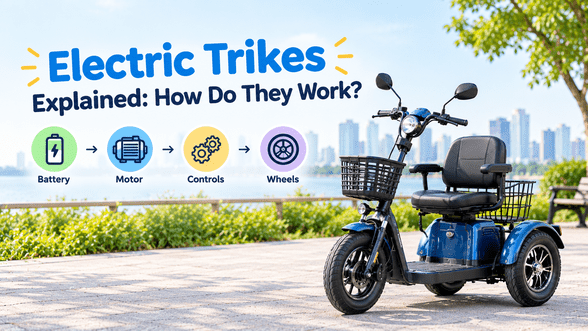

Electric trikes are three-wheeled vehicles that use a rechargeable battery and an electric motor to move. They are available in different sizes, from small ride-on models for children to larger versions designed for adults. Their three-wheel design can provide extra support, while battery power makes movement easier. Understanding how these vehicles work can help you decide whether one is suitable for your needs.
What Are Electric Trikes?
These vehicles have three wheels and an electric motor that helps them move forward. Unlike a traditional tricycle, which usually depends on pedalling, an electric model uses power stored in a rechargeable battery.
Some models have pedals, while others use a throttle, buttons, or simple controls to start and control movement. Depending on the design, they may also include a comfortable seat, lights, footrests, and a storage basket.
E trikes are available for different users and purposes. Children’s models are generally designed for recreational use, while larger adult versions may be made for short journeys or everyday travel.
Before choosing one, check its intended use because the size, speed, and safety features can vary considerably.
How Do These Vehicles Work?
An electric model uses several main parts to turn stored electrical energy into movement.
1. The Battery Stores Energy
The battery provides the electricity needed to run the motor. Once charged, it stores energy that the vehicle can use during a ride.
Battery capacity affects how long the vehicle can operate before needing another charge. A larger battery may provide a longer running time, but other factors also affect performance.
These include the rider’s weight, speed, road conditions, and motor power.
2. The Motor Creates Movement
The motor changes electrical energy into mechanical movement. When the rider activates the controls, electricity flows from the battery to the motor. The motor then helps turn the wheels, allowing the vehicle to move forward.
Motor power can affect acceleration and performance. However, a more powerful motor is not always necessary. The right amount of power depends on the rider’s needs and the manufacturer’s intended use.
3. The Controls Manage Speed
Most models have controls that help the rider start, accelerate, and stop. Depending on the design, these controls may include a throttle, buttons, a key, or a foot pedal. Children’s ride-on products often have simpler controls than larger adult models.
Always read the instruction manual before using a new vehicle. Learning how the controls work before riding can help prevent accidents.
4. The Wheels Support the Vehicle
The three-wheel design creates a wider base of support than a typical two-wheel scooter. This can make balancing easier in certain situations, particularly when the vehicle is stationary.
However, three wheels do not guarantee complete safety. Taking sharp turns too quickly or riding over uneven surfaces can still cause the vehicle to tip.
Riders should maintain a suitable speed and follow the manufacturer’s safety instructions.
What Are the Benefits?
These vehicles offer several advantages, depending on their design.
- Extra support: Three wheels can make balancing easier in certain situations.
- Simple controls: Many models are designed for straightforward operation.
- Rechargeable power: The battery can be charged and used repeatedly.
- Comfortable riding: Some designs include supportive seats and footrests.
- Different options: Models are available for various ages and purposes.
For children, a suitable ride-on model can make outdoor play more enjoyable. Adults may prefer larger versions with comfortable seating and practical features.
Always choose a model that matches the intended rider’s age, abilities, and needs.
How Are They Different From Traditional Tricycles?
A traditional tricycle usually moves when the rider pushes the pedals. An electric version uses a battery-powered motor to provide movement.
This can reduce the physical effort needed to operate the vehicle, depending on its design.
However, battery-powered models need regular charging and may require electrical maintenance. Traditional tricycles do not depend on batteries, so they can be simpler to maintain.
The best option depends on whether the rider prefers physical pedalling or motor-assisted movement.
What Should You Check Before Buying?
Choosing the right model involves more than looking at its appearance. Consider these important points before placing an order.
Safety and Age Suitability
Check the recommended age, weight limit, brakes, and safety features. For children, adult supervision and suitable protective equipment are important.
Battery and Charging
Review the expected running time and charging period. Make sure the charger is compatible with the product and follow the manufacturer’s charging instructions.
Speed and Comfort
Choose a suitable speed for the intended rider. Check the seat, handlebars, footrests, and overall size to make sure the vehicle is comfortable to use.
Price and Product Details
Compare the features, warranty, and maintenance requirements before making a decision. When browsing products through ToysUAE, read the online product description carefully to understand the model’s specifications and intended use.
Frequently Asked Questions
1. Do electric three-wheel vehicles need petrol?
No. They use rechargeable batteries to power their electric motors instead of petrol.
2. How long does the battery last?
The running time depends on battery capacity, motor power, speed, rider weight, and the surface being used. Check the manufacturer’s specifications for an estimate.
3. Are these vehicles easy to ride?
Many models have simple controls, and the third wheel can provide additional support. However, riders still need to learn how to steer, turn, and stop safely.
4. Are they suitable for children?
Some models are designed specifically for children. Always check the recommended age, weight limit, speed, and safety instructions before buying.
5. Can they be used in rainy weather?
Wet surfaces can reduce tyre grip and increase the risk of slipping. Follow the manufacturer’s guidance on water resistance and avoid riding in unsafe conditions.
6. How should the battery be charged?
Use the recommended charger and follow the manufacturer’s instructions. Charge the battery in a suitable location and avoid charging it near flammable materials.
Final Thoughts
Battery-powered three-wheel vehicles offer a convenient way to enjoy motor-assisted movement. Understanding their batteries, motors, controls, and safety features makes it easier to compare different models. Before buying, check the product specifications and choose a design that suits the intended rider, available space, and planned use.