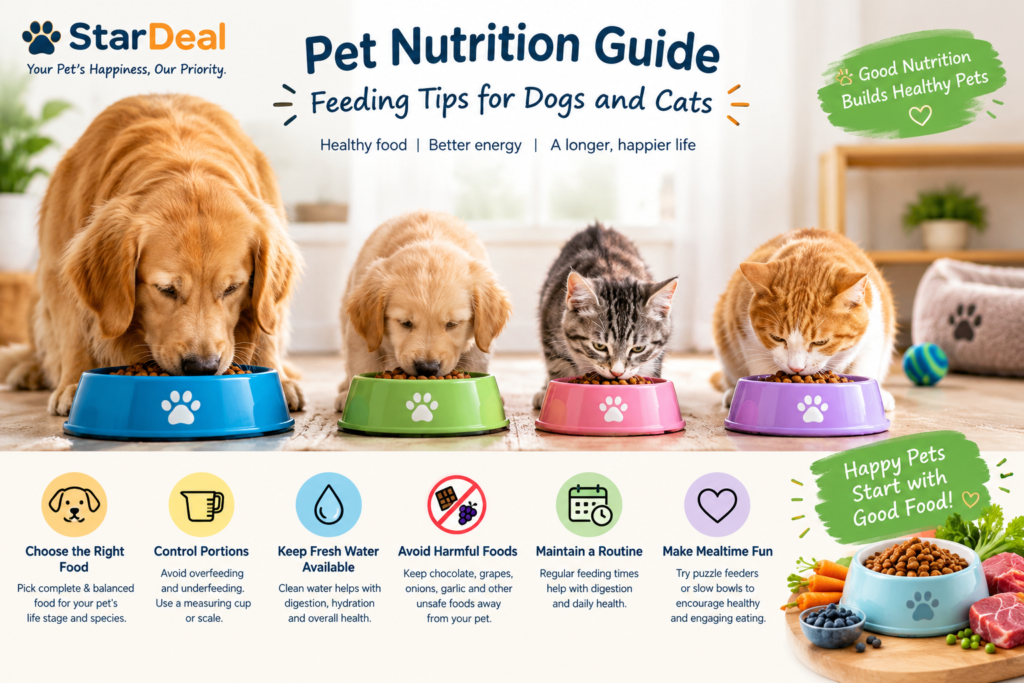

Pet Nutrition Guide: Feeding Tips for Puppies, Adult Dogs, and Cats
Providing the right food is one of the most important ways to support your pet’s health and happiness. From growing puppies to adult dogs and curious cats, every pet has unique nutritional needs that change throughout life.
A good pet nutrition guide can help you understand food choices, feeding schedules, portion sizes, and everyday mealtime habits. With the right approach, you can make feeding time healthier, safer, and more enjoyable for your furry companion.
At StarDeal, we believe that thoughtful daily care helps pets live happier lives.
Why Is Proper Pet Nutrition Important?
Balanced nutrition helps support your pet’s growth, energy, and overall well-being. The right diet provides essential nutrients that help maintain muscles, bones, skin, coat, and normal body functions.
Good nutrition can help:
- Support healthy growth and development.
- Maintain a healthy body weight.
- Provide energy for daily activities.
- Support skin and coat condition.
- Help maintain overall wellness.
Dogs and cats have different nutritional requirements. Always choose food designed for your pet’s species and life stage.
1. Feeding Puppies and Kittens
Young pets grow quickly and need nutrition designed for development.
Puppies and kittens generally require food formulated for growth. They may also need more frequent meals than adult pets.
Helpful feeding tips include:
- Choose food specifically formulated for puppies or kittens.
- Follow the feeding instructions on the food packaging.
- Divide daily food into suitable meals.
- Provide fresh water at all times.
- Ask your veterinarian about feeding needs as your pet grows.
Avoid giving young pets supplements unless your veterinarian recommends them.
2. Feeding Adult Dogs
Adult dogs need a balanced diet that supports their activity level and body condition.
Some dogs are highly active, while others spend more time resting indoors. Their food portions should reflect their individual needs.
To support healthy feeding:
- Select complete and balanced adult dog food.
- Measure portions consistently.
- Keep treats moderate.
- Monitor your dog’s weight and body condition.
- Adjust food amounts when activity levels change.
If you are unsure about portion sizes, your veterinarian can help determine an appropriate daily amount.
3. Feeding Cats the Right Way
Cats have specific nutritional needs and require a diet formulated for their species.
Choose complete and balanced cat food appropriate for your cat’s life stage. Some cats prefer several small meals throughout the day, while others follow a different routine.
Keep fresh water available and monitor your cat’s appetite. A sudden change in eating habits should be discussed with a veterinarian.
Never assume that dog food is suitable as a regular diet for cats.
4. Understand Portion Control
Providing the correct amount of food is an important part of pet nutrition.
Overfeeding may contribute to weight gain, while underfeeding may prevent your pet from receiving enough nutrients.
Use the food packaging as a starting point and consider your pet’s age, weight, activity level, and health. A measuring cup or kitchen scale can help make portions more consistent.
Remember that treats and snacks also contribute to daily calorie intake.
5. Choose the Right Type of Pet Food
Pet food comes in different forms, including dry food, wet food, and certain veterinary diets.
Each option may have advantages depending on your pet’s preferences and needs.
Dry food: Convenient to store and portion.
Wet food: Contains more moisture and may appeal to pets that prefer softer textures.
Veterinary diets: Designed for specific health needs and should be used with professional guidance.
Choose food that is complete and balanced for your pet’s species and life stage. Consult your veterinarian if your pet has allergies, digestive issues, or other medical concerns.
6. Keep Fresh Water Available
Water is essential for your pet’s health.
Make sure your pet has access to clean drinking water throughout the day. Wash bowls regularly and refill them whenever needed.
Some pets enjoy drinking from fountains, while others prefer ordinary bowls. Choose an option that suits your pet and encourages regular drinking.
7. Avoid Unsafe Foods
Some foods that people enjoy can be harmful to pets.
Keep these foods away from dogs and cats:
- Chocolate.
- Grapes and raisins.
- Onions and garlic.
- Alcohol.
- Products containing xylitol.
- Excessively salty or fatty foods.
Bones, leftovers, and unfamiliar foods may also cause problems. If your pet eats something potentially toxic, contact a veterinarian or animal poison service immediately.
8. Establish a Consistent Feeding Routine
A regular feeding schedule can help make daily care more organized.
Feed your pet in a calm area and use consistent portions. If you have multiple pets, separate feeding spaces may help prevent competition.
Avoid sudden dietary changes. When changing foods, gradual transitions are often easier on your pet’s digestive system unless your veterinarian advises otherwise.
9. Monitor Your Pet’s Weight and Appetite
Your pet’s appetite and body condition can provide useful information about their health.
Observe whether your pet:
- Eats more or less than usual.
- Leaves food in the bowl.
- Gains or loses weight unexpectedly.
- Shows discomfort while eating.
- Experiences repeated digestive problems.
Contact your veterinarian if you notice persistent or sudden changes, especially when accompanied by other symptoms.
10. Make Mealtime Enjoyable
Feeding time can also provide mental stimulation.
Depending on your pet’s needs, you may use puzzle feeders, slow-feeding bowls, or food-dispensing toys. These products can make meals more engaging for some pets.
Choose products that are suitable for your pet’s size and chewing habits. Supervise their use when necessary and clean feeding accessories regularly.
Conclusion: Give Your Pet the Nutrition They Deserve
Proper nutrition is one of the foundations of a happy and healthy pet. Understanding your pet’s life stage, choosing suitable food, managing portions, and maintaining a consistent feeding routine can help support their daily well-being.
Every pet is different, so their feeding plan should reflect their individual needs. Monitor your pet’s appetite and body condition, provide fresh water, and consult a veterinarian whenever you have concerns about their diet.
At StarDeal, we believe that every mealtime is an opportunity to show your pet love and care. With thoughtful feeding habits and useful pet essentials, you can help make everyday life more comfortable for your furry companion.
Explore StarDeal today and discover practical pet feeding essentials for your beloved friend!
StarDeal — Your Pet’s Happiness, Our Priority.