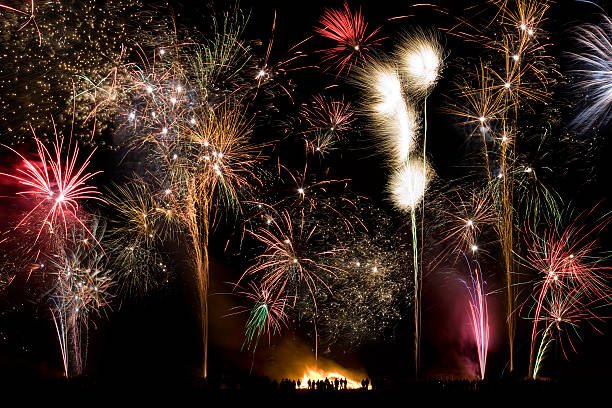

Every November, people across the UK gather to watch colourful fireworks, enjoy outdoor celebrations and remember one of the most famous events in British history. Bonfire Night fireworks are a familiar part of these celebrations, but the occasion has a story that goes back more than 400 years.
Known as Guy Fawkes Night or Fireworks Night, Bonfire Night takes place on 5 November. Families may attend organised displays, light sparklers or arrange a small fireworks display at home.
If you are planning to celebrate, it helps to understand the history behind the event, the rules for using fireworks and the precautions that make an evening safer for everyone.
What Is Bonfire Night?
Bonfire Night is an annual British observance held on 5 November. It commemorates the failure of the Gunpowder Plot in 1605, when a group of conspirators planned to blow up the Houses of Parliament in London.
The plot was intended to kill King James I and other figures of the government during the State Opening of Parliament.
Guy Fawkes became the best-known figure associated with the conspiracy because he was discovered guarding barrels of gunpowder beneath the Parliament buildings.
Today, Bonfire Night is commonly marked with public fireworks displays, bonfires and family gatherings. Although its historical origins are political and religious, many modern celebrations focus on community events and seasonal entertainment.
The History of Guy Fawkes Night
Understanding the history of Bonfire Night explains why the date remains significant.
The Gunpowder Plot of 1605
In the early seventeenth century, religious tensions shaped much of English public life. A group of Catholic conspirators planned to destroy the Houses of Parliament when the king and government officials were expected to be present.
Their plan became known as the Gunpowder Plot.
Guy Fawkes was involved in guarding the explosives stored beneath the Parliament buildings. However, the authorities discovered the plot before it could be carried out.
Why Was Guy Fawkes Arrested?
During the night of 4 November 1605, officials searched the cellars beneath Parliament and found Guy Fawkes with the gunpowder.
He was arrested, and the planned attack did not take place.
The discovery led to the arrest and eventual punishment of the conspirators.
Why Is Bonfire Night Celebrated on 5 November?
The failure of the plot was marked by celebrations, including bonfires. Over time, 5 November became an established date for commemorating the event.
Fireworks later became a prominent feature of the occasion, helping create the modern celebration many people recognise today.
Is Guy Fawkes Night the Same as Fireworks Night?
The terms are often used interchangeably.
- Bonfire Night highlights the traditional use of bonfires.
- Guy Fawkes Night refers to the historical figure associated with the Gunpowder Plot.
- Fireworks Night describes the displays that have become a central part of modern celebrations.
All three names commonly refer to celebrations around 5 November.
When Is Bonfire Night in the UK?
Bonfire Night takes place on 5 November every year.
In 2026, it falls on Thursday, 5 November.
However, organised displays may take place on nearby dates, particularly when event organisers choose a weekend to make attendance easier.
If you plan to attend a public event, check its advertised date, start time, entry arrangements and weather policy before travelling.
Why Are Fireworks Used on Bonfire Night?
Fireworks have become closely associated with Bonfire Night because they create a memorable visual display in the autumn evening sky.
Different types of fireworks produce different effects, including bright bursts, coloured stars, sparkling trails and repeated aerial patterns.
Common options for celebrations include:
- Rockets: Travel upwards before producing an aerial effect.
- Barrages and cakes: Fire a sequence of shots from a stationary unit.
- Fountains: Produce a display of sparks from a fixed position.
- Sparklers: Create a handheld sparkling effect when used according to their instructions.
The suitable choice depends on the venue, available space, product category and required safety distance.
For many families, attending an organised display is a practical way to enjoy fireworks without managing the risks of setting them off at home.
How to Plan a Safe Home Fireworks Display
A home display requires more preparation than simply buying fireworks and choosing a suitable evening.
1. Check the Available Space
Before purchasing fireworks, assess the garden or private outdoor area where the display will take place.
Consider nearby buildings, fences, trees, parked vehicles, overhead cables and neighbouring properties.
Every firework has a specified safety distance. The site must be large enough to accommodate that distance and any additional space needed for falling debris.
Category F2 fireworks are intended for outdoor use in relatively confined areas, with a minimum spectator distance of 5 metres. Category F3 fireworks are intended for larger open outdoor areas, with a minimum spectator distance of 25 metres.
Always follow the distance stated on the individual product. If your garden cannot accommodate the required space, do not use that firework there.
2. Buy From a Reputable Seller
Purchase fireworks from a legitimate, registered or licensed seller, as applicable to the time and place of purchase.
Check the product category, safety markings, instructions and required spectator distance before buying.
Do not buy products from unknown sellers or use fireworks with damaged packaging or unclear instructions.
3. Read the Instructions Before Lighting
Read the instructions for every firework before use.
Make sure the person responsible for lighting the fireworks understands the setup requirements and safety precautions.
Use a torch to read instructions in low light rather than using a naked flame.
4. Prepare a Safe Viewing Area
Keep spectators at the required distance throughout the display.
Children should remain under responsible adult supervision, and pets should be kept away from the firing area.
Keep a clear route away from the display area and avoid allowing guests to stand where fireworks or debris could fall.
5. Keep Water and Emergency Equipment Nearby
Have a suitable supply of water available for emergencies and for soaking spent fireworks after they have cooled.
Do not assume that a firework is safe to approach simply because it appears to have stopped working.
6. Avoid Alcohol When Handling Fireworks
The person responsible for setting off fireworks should remain alert and should not drink alcohol.
If no suitable, sober adult is available to manage the display safely, postpone the home display or attend an organised event instead.
UK Fireworks Laws You Should Know
The rules for fireworks in the UK cover purchasing, use, timing and location.
Minimum Age for Buying Adult Fireworks
In Great Britain, you must generally be at least 18 to buy adult fireworks, including Category F2 and F3 products.
Certain low-hazard Category F1 items have different age requirements.
Always check the product category and applicable local rules.
What Time Can You Set Off Fireworks?
In England and Wales, fireworks must generally not be set off between 11pm and 7am.
Bonfire Night is an exception: the cut-off is midnight on 5 November.
New Year’s Eve, Diwali and Chinese New Year have a later cut-off of 1am.
Rules and enforcement can differ in Scotland and Northern Ireland, so check the requirements that apply to your location.
Can You Set Off Fireworks in a Street or Public Place?
Fireworks must not be set off or thrown in streets or other public places under the relevant UK rules.
A home display should take place on suitable private land where permission has been obtained.
Organised public events may have their own permissions, risk assessments and safety arrangements.
When Can You Buy Fireworks?
In Great Britain, registered sellers can generally sell fireworks for private use during the main seasonal periods, including 15 October to 10 November and 26 to 31 December, with additional periods around Diwali and Chinese New Year.
Outside these periods, private purchases generally require a licensed seller.
Check the current rules before buying.
Bonfire Safety: What to Check Before Lighting a Fire
A bonfire introduces additional hazards beyond the fireworks themselves.
If you plan to have one, assess the location carefully and consider whether it is necessary. A small gathering without a bonfire may be easier to manage.
Choose a Suitable Location
Keep the bonfire well away from buildings, sheds, fences, trees, hedges and other combustible materials.
Avoid areas where smoke could affect roads, neighbouring homes or people with breathing difficulties.
Never light a bonfire where it could endanger overhead cables or nearby vegetation.
Check the Bonfire Structure
Before lighting, check that the structure is stable and that no children, animals or objects are trapped inside it.
Only an adult who understands the risks should be responsible for lighting the fire.
Never Use Petrol or Paraffin
Do not use petrol, paraffin or other accelerants to light or revive a bonfire. These substances can ignite suddenly and cause severe burns.
Keep a suitable means of extinguishing the fire nearby.
Never Leave a Bonfire Unattended
An adult should supervise the fire until it has safely burnt out or been extinguished.
Do not leave it burning while everyone goes indoors or leaves the property.
Keeping Children Safe on Bonfire Night
Children often enjoy the lights and excitement of Bonfire Night, but they need clear boundaries around fireworks and open flames.
- Keep children at the required spectator distance.
- Never allow children to light adult fireworks.
- Do not let children approach fireworks that have already been lit.
- Keep matches, lighters and fireworks out of reach.
- Follow age guidance and supervision requirements for sparklers.
- Provide warm clothing suitable for cold November weather.
Sparklers can become extremely hot. Never give them to children under five, and follow the manufacturer’s instructions for any age-appropriate use.
When a sparkler has finished, place it in a bucket of water rather than leaving it on the ground.
How to Make Bonfire Night More Comfortable for Pets
Fireworks can be frightening for dogs, cats and other animals because of the sudden flashes and loud noises.
A little preparation can reduce some of the stress.
Prepare a Quiet Indoor Space
Keep pets indoors during fireworks where possible, with access to a familiar, comfortable place to hide.
Close windows and curtains to reduce noise and flashes.
Walk Dogs Earlier
If you have a dog, consider walking it before fireworks are expected to begin.
Keep dogs securely supervised outdoors and avoid taking them close to a display.
Give Neighbours Advance Notice
Let nearby households know when you plan to use fireworks.
This gives pet owners time to prepare, particularly if they live close to your garden.
Consider Low-Noise Options
If you are planning a home display, consider lower-noise products where available and appropriate.
A shorter display or attendance at an organised event may also help reduce disruption to neighbours and animals.
What to Do if a Firework Fails to Go Off
A firework that fails to operate can still be dangerous.
Never approach it immediately, attempt to relight it or dismantle it.
Keep people away and follow the product manufacturer’s instructions for failed fireworks.
If you are unsure how to manage the situation safely, leave the area clear and seek appropriate advice.
Once fireworks and debris are completely cool, follow current disposal guidance. UK safety guidance recommends soaking spent fireworks and debris in water overnight before placing them in a suitable rubbish bag for disposal.
Public Display or Home Display: Which Should You Choose?
Both options can form part of a Bonfire Night celebration, but they involve different responsibilities.
| Feature | Organised Public Display | Home Display |
|---|---|---|
| Safety management | Arranged by event organisers and display operators | Responsibility rests with the person organising the display |
| Space | Usually selected for the planned event | Limited by the available private outdoor area |
| Fireworks | Often selected for the venue and audience | Must suit the space and product requirements |
| Convenience | No need to operate fireworks yourself | Requires preparation, equipment and supervision |
| Pets and neighbours | Noise and timing are determined by the event | You can plan the duration and consider lower-noise options |
For households with limited outdoor space, an organised public display is often the more practical option.
A home display should only go ahead when the site, fireworks and people responsible for using them are suitable for the task.
Frequently Asked Questions
Why do we celebrate Bonfire Night on 5 November?
The date marks the failure of the Gunpowder Plot in 1605, when conspirators planned to blow up the Houses of Parliament and kill King James I.
Is Bonfire Night the same as Guy Fawkes Night?
Yes. The names are commonly used for the same annual observance on 5 November.
What time must fireworks stop on Bonfire Night?
In England and Wales, the usual 11pm cut-off is extended to midnight on 5 November. Check local requirements, especially if you are in Scotland or Northern Ireland.
Can I have fireworks in my garden?
It depends on the available space, firework category and required safety distance. Never use a firework if you cannot provide the space stated in its instructions.
Are fireworks suitable for young children?
Adult fireworks are not for children to handle or ignite. Children should watch from a safe distance under adult supervision.
Is it safer to attend a public fireworks display?
Organised displays have planned viewing areas and designated people responsible for operating the fireworks. For many families, they are a more practical choice than setting off fireworks at home.
How can I protect my pets on Bonfire Night?
Keep pets in a quiet indoor space, close windows and curtains, and let them settle somewhere familiar. Give neighbours advance notice if you are planning a home display.
How should spent fireworks be disposed of?
Wait until all fireworks and debris are completely cool, then follow current safety guidance. Spent fireworks should generally be soaked in water overnight before being bagged for disposal.
Final Thoughts
Bonfire Night is a long-standing British tradition that combines the history of the Gunpowder Plot with modern fireworks displays and community celebrations.
Whether you attend a public event or plan a home gathering, preparation is essential. Check the law, choose fireworks that suit the available space, follow the manufacturer’s instructions and keep children, pets and spectators away from hazards.
A safe celebration also means thinking about neighbours, wildlife and the people who may find loud fireworks distressing. With sensible planning and consideration, Bonfire Night can be enjoyed while reducing unnecessary risks.