


Brazilian Jiu-Jitsu is built around movement, positioning, timing, technique, and repetition. Training with a live partner is essential for developing those skills, but there are also situations where additional practice at home can be useful. A grappling dummy can provide a practical way to review selected movements and reinforce techniques between regular academy sessions.
Solo BJJ training should not be considered a replacement for coaching or live rolling. Instead, it can be used as supplementary practice that helps athletes become more familiar with body positioning, transitions, and movement patterns.
What Is a Grappling Dummy?
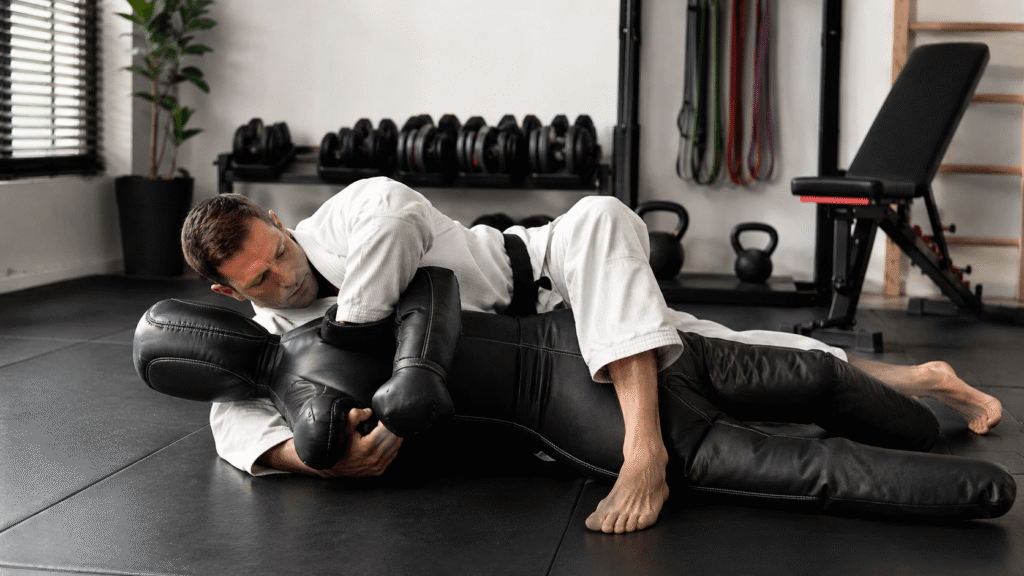
A grappling dummy is a human-shaped training tool designed for practicing certain martial arts and grappling movements. Depending on its design, it can be positioned on the ground, used in a seated or kneeling position, or placed upright for selected standing drills.
Unlike a live partner, a dummy does not react, resist, or change position. This makes it unsuitable for reproducing the full experience of live BJJ training, but it can be useful for repetitive technical practice.
For beginners, a dummy can also make it easier to concentrate on the sequence of a movement without worrying about accidentally applying pressure to another person.
Why Use a Grappling Dummy for BJJ?
One of the main advantages of dummy training is repetition. A practitioner can perform the same movement several times while paying attention to positioning and mechanics.
For example, a student who learned a particular transition during class may want to review the movement at home. Repeating the sequence slowly can help reinforce the order of the steps and make the movement more familiar.
A grappling dummy can be useful for practicing:
- Guard movement
- Mount transitions
- Side-control transitions
- Back-control positioning
- North-south transitions
- Selected guard-passing movements
- Armbar sequences
- Triangle positioning
- Kimura and Americana movements
- Wrestling entries
- Clinch positioning
- Selected submission transitions
The exact techniques that can be practiced depend on the dummy’s shape and construction.
Repetition Without a Training Partner
Finding a training partner outside scheduled classes is not always practical. Work, school, family responsibilities, travel, and different schedules can make additional partner training difficult.
A grappling dummy provides an option for practicing selected techniques independently.
This is especially useful when the goal is repetition rather than testing a technique against resistance. The practitioner can slow down the movement, identify awkward positions, reset the dummy, and repeat the sequence.
Quality is more important than simply completing a large number of repetitions. Performing a movement incorrectly hundreds of times can reinforce poor habits, so techniques should first be learned and corrected under qualified instruction.
Practicing Positional Transitions
BJJ involves constant transitions between positions. Moving from guard to mount, side control to mount, or mount to back control requires coordination and an understanding of body positioning.
A dummy can help practitioners rehearse these transitions.
Instead of rushing through a sequence, try breaking it into smaller stages. Focus on where the hands, hips, knees, and upper body should be positioned during each part of the movement.
Once the sequence feels familiar, the practitioner can gradually increase the pace while maintaining control.
Submission Practice
Certain submission movements can also be rehearsed with a grappling dummy.
For example, practitioners may use a dummy to review the movement patterns involved in armbars, triangles, kimuras, Americana-style positions, and selected chokes.
The objective during solo practice should be technical familiarity rather than trying to simulate the pressure and reactions of a live opponent.
A coach can also help determine whether a particular submission is suitable for solo drilling and how it should be practiced safely.
Combining Dummy Training With Solo Drills
A grappling dummy does not have to be the entire home workout. It can be combined with movement drills and conditioning exercises.
A simple session might begin with a warm-up followed by several minutes of:
- Hip movement drills
- Shrimping and bridging
- Technical stand-ups
- Guard movement
- Dummy positional transitions
- Selected submission repetitions
- Light conditioning
This approach allows practitioners to work on general movement as well as specific techniques.
Choosing a Grappling Dummy
There are many different types of grappling dummies, so the right choice depends on how the equipment will be used.
Consider the following factors before purchasing one.
Size
The dummy should be appropriate for the practitioner’s training needs and available space. Larger models may provide more realistic dimensions, while smaller options can be easier to store.
Position
Some dummies are designed primarily for ground grappling, while others can be used for standing drills. Think about whether your training will focus on BJJ ground positions, wrestling, MMA, or a combination of activities.
Material
Construction materials can affect durability, feel, and maintenance requirements. Common materials include synthetic leather, canvas, nylon, and other durable fabrics.
Filling
Some dummies come pre-filled, while others are sold unfilled so the owner can choose the filling material and weight.
Storage
Home athletes should also consider where the dummy will be stored between sessions. A training tool that is difficult to store may eventually become inconvenient to use.
Creating a Simple Home BJJ Routine
A home session does not need to be extremely long.
For example, a practitioner could spend 5–10 minutes warming up, followed by 15–20 minutes of technical movement and dummy drills. The session could finish with mobility or general conditioning.
The exact duration should depend on the athlete’s overall training schedule and recovery needs.
Consistency is often more useful than occasional marathon sessions. Short technical sessions performed regularly can provide additional opportunities to review movements learned in class.
Avoiding Common Mistakes
Home BJJ training can become less effective when practitioners focus only on speed or repetition numbers.
One common mistake is practicing techniques that have never been properly learned. Another is assuming that a dummy provides the same feedback as a live partner.
A dummy does not tap, escape, defend, counter, or change its weight distribution. These differences are important.
It is also important to use an appropriate training surface. Ground grappling can involve falls, pressure, and repeated contact with the floor, so a suitable training mat can make home practice more practical.
Home Training and Academy Training
The most useful role of a grappling dummy is as a supplement to regular BJJ training.
An academy provides access to coaches and training partners who can provide feedback, resistance, timing, and unpredictable reactions. Live rolling also teaches practitioners how techniques change when an opponent actively tries to escape or counter.
Home practice offers something different: controlled repetition.
A productive training cycle might look like this:
Learn → Practice → Review → Return to class → Apply
A technique can be learned during class, reviewed through controlled practice at home, and then tested against appropriate resistance during future partner training.
Making Solo BJJ Training More Productive
A few simple habits can improve home practice.
Choose a small number of techniques rather than trying to practice everything in one session. Record the movements you want to review and focus on technical details.
It can also help to practice slowly before increasing speed. Slow repetitions make it easier to notice balance, positioning, and transitions.
Most importantly, keep home practice connected to what you are learning in class.
Final Thoughts
Grappling dummies can be useful tools for practitioners who want additional opportunities to practice BJJ at home. They allow selected positional movements, transitions, and submission sequences to be repeated without requiring a training partner.
However, solo practice has clear limitations. A dummy cannot reproduce resistance, reactions, timing, or the unpredictability of a live opponent.
For that reason, the most practical approach is to combine home practice with regular instruction and live partner training. Used in this way, a grappling dummy can become a useful part of a broader BJJ training routine.
For practitioners exploring equipment for solo grappling practice, a grappling dummy for home training can provide a practical option for repeating selected BJJ movements and positional drills.