


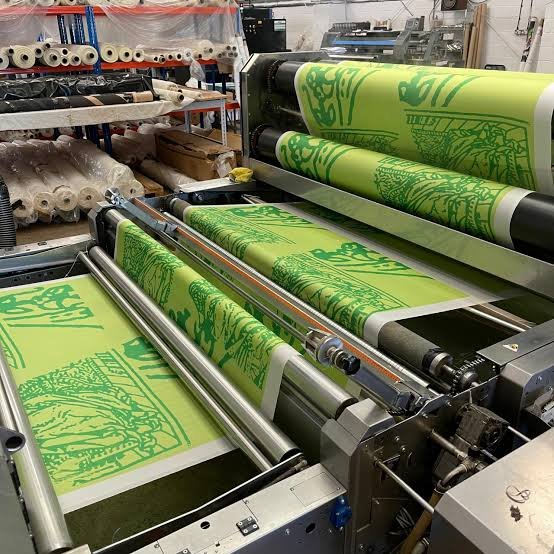

Digital printing on fabric is a modern textile decoration method that uses digital inkjet technology to transfer designs directly onto suitable fabric. Instead of creating separate screens or engraved rollers for different designs, the printer receives artwork as a digital file and applies ink according to the image. This allows manufacturers to reproduce detailed patterns, photographs, logos, gradients, and customized artwork with considerable accuracy.
The growing use of Digital printing on fabric has made textile production more flexible for designers, manufacturers, fashion brands, and custom product businesses. It is especially useful when a company needs samples, short production runs, personalized designs, or frequent artwork changes. However, good results depend on choosing the correct combination of fabric, ink, pretreatment, printing settings, and finishing process.
What Is Digital Fabric Printing?
Digital fabric printing is an inkjet-based textile printing process. Specialized printheads release extremely small droplets of ink onto the fabric according to instructions contained in a digital image file.
The technology differs from conventional screen printing because the design is transferred electronically rather than being separated into physical screens. A new design can therefore be prepared and printed without producing a new set of screens.
Digital printing does not mean that every fabric can be printed using the same machine or ink. Cotton, polyester, silk, wool, nylon, and blended materials have different chemical and physical properties. The printing method must be selected according to the fiber and intended application.
How Does Digital Printing on Fabric Work?
Preparing the Artwork
The process starts with a digital design. It may be a photograph, illustration, repeating pattern, logo, or combination of different graphics.
The artwork is checked for dimensions, resolution, color settings, and pattern repetition. High-resolution artwork is important when the design contains fine details. A low-quality image may look acceptable on a small screen but appear pixelated when printed at a larger size.
Preparing the Fabric
Fabric preparation depends on the selected printing technology. Some textiles require pretreatment before ink is applied. Pretreatment can help control ink absorption and improve color development, edge definition, and consistency.
The fabric may also need to be cleaned, dried, and properly tensioned before entering the printer.
Printing the Design
During printing, the printheads move across the textile while depositing controlled amounts of ink. The printer uses the digital artwork to determine the position and quantity of each ink droplet.
Modern textile printers can produce intricate designs with multiple colors and smooth tonal transitions. Production settings such as print resolution, speed, ink density, and fabric handling can affect the final appearance.
Fixation and Finishing
After printing, the fabric may require a fixation process. The exact method depends on the ink technology. Heat or steam can be used to help dyes or pigments achieve the required performance.
Some dye-based processes also require washing to remove unfixed dye and processing chemicals. The textile is then dried and finished according to its intended use.
Main Types of Digital Textile Printing
Reactive Digital Printing
Reactive printing is commonly used for cellulose fibers such as cotton, linen, and viscose. Reactive dyes form a chemical bond with suitable textile fibers during the fixation process.
This method can produce bright colors and good wash durability when the fabric is correctly pretreated, printed, fixed, and washed. It is often used for clothing, bedding, scarves, and other cotton-based products.
Pigment Printing
Pigment inks contain colored particles that are held on the textile surface with the help of a binder. Depending on the formulation and equipment, pigment printing can be used with several types of fabrics.
One practical advantage is that some pigment workflows can reduce the wet-processing stages associated with certain dye-based methods. However, curing conditions and binder performance are important because they influence the durability and hand feel of the finished fabric.
Dye-Sublimation Printing
Dye-sublimation printing is mainly used for polyester and compatible synthetic materials. Heat causes the dye to transfer into the polyester fibers.
This method is widely used for sportswear, flags, banners, exhibition graphics, promotional textiles, and other polyester products. It can produce detailed images without leaving a heavy printed layer on the fabric surface.
Acid Digital Printing
Acid dyes are suitable for fabrics such as silk, wool, and some polyamide materials. The process can produce strong colors and detailed designs when the fabric and ink system are properly matched.
Acid printing is commonly associated with fashion textiles, scarves, and decorative fabrics where detailed artwork is required.
Key Benefits of Digital Fabric Printing
Greater Design Flexibility
Digital printing gives designers considerable freedom when creating artwork. Photographs, gradients, fine lines, complex illustrations, and multiple colors can be incorporated into a single design.
Changing the artwork is also relatively straightforward because the design exists as a digital file rather than a physical screen arrangement.
Cost-Effective Sampling
Sampling is an important stage in textile development. A designer may need to check colors, scale, fabric behavior, and overall appearance before placing a larger production order.
Digital printing makes small test quantities practical in many situations. A company can print a sample, identify problems, adjust the artwork, and produce another version without rebuilding conventional printing equipment.
Suitable for Short Runs
Digital technology can be useful when only a limited amount of fabric is required. It is suitable for prototypes, custom orders, limited-edition collections, personalized products, and small business production.
The economic advantage depends on the equipment, fabric, ink, labor, and production volume, so digital printing should still be evaluated according to the specific order.
Detailed Customization
Businesses can use digital printing to create personalized names, images, logos, artwork, and patterns. This makes it useful for custom clothing, interior fabrics, promotional materials, and specialized textile products.
Practical Considerations Before Printing
Choose the Correct Fabric
Fabric composition should be identified before selecting a printing system. A method designed for polyester may not provide the desired result on cotton.
The fabric’s weave, surface texture, weight, and absorbency can also influence print quality. Testing the actual material is more reliable than assuming that a general fabric category will behave the same in every situation.
Manage Color Carefully
Color on a computer monitor is produced using light, while printed color is produced using ink or dye. As a result, a design displayed on screen may not exactly match the finished textile.
Color profiles, printer calibration, ink characteristics, fabric color, and lighting conditions all influence the final result. For commercial production, businesses should establish a consistent color management process.
Test Wash and Wear Performance
A print intended for clothing needs different performance characteristics from one used for a decorative wall hanging.
Before large-scale production, testing can help determine whether the print has sufficient resistance to washing, rubbing, light exposure, or other conditions associated with its intended use.
Common Challenges and Limitations
Digital textile printing offers significant flexibility, but several factors can affect results.
Color variation can occur between different fabrics, production batches, or printing conditions. Consistent pretreatment and controlled production settings can help reduce unwanted differences.
Fabric preparation is another important consideration. Poor pretreatment can lead to uneven color, bleeding, weak definition, or inconsistent absorption.
Production speed also varies between machines. Some industrial printers are designed for continuous high-volume production, while smaller systems are intended for samples and customized orders.
Operating costs include more than ink. Fabric, pretreatment chemicals, energy, labor, maintenance, fixation, washing, and finishing can all contribute to the final cost.
Applications of Digital Printing on Fabric
Digital textile printing is used across several industries.
In fashion, it is used for dresses, shirts, scarves, skirts, jackets, and other garments requiring detailed or customized patterns.
In home textiles, digital printing can produce designs for curtains, cushions, bedding, table coverings, and decorative fabrics.
In sportswear, dye-sublimation printing is widely used with polyester because it can reproduce detailed graphics suitable for team uniforms and athletic garments.
The process is also useful for flags, banners, exhibition displays, promotional textiles, personalized products, and interior decoration.
Frequently Asked Questions
1. What is digital printing on fabric?
It is a textile printing process that uses specialized digital inkjet printers to apply designs directly onto suitable fabric. The printer follows instructions from a digital artwork file.
2. Which fabrics can be digitally printed?
Cotton, polyester, silk, viscose, linen, wool, nylon, and various blends can be digitally printed, but the appropriate ink and printing process differ according to the fiber.
3. Is digital fabric printing suitable for small orders?
Yes. Digital printing is often practical for samples, prototypes, customized products, and short production runs because it does not require the same type of physical screen preparation used in conventional printing.
4. Can photographs be printed on fabric?
Yes. Digital textile printers can reproduce photographs, detailed illustrations, gradients, and other complex imagery when the artwork, printer, ink, and fabric are compatible.
5. How can print quality be improved?
Use suitable fabric and ink, prepare high-quality artwork, control pretreatment, maintain accurate color settings, and test the finished textile before starting large-scale production.
Conclusion
Digital printing on fabric has become an important option for textile businesses that need detailed designs, customization, efficient sampling, and flexible production. Its digital workflow makes artwork changes easier and can make small production quantities practical.
The quality of the finished product depends on the complete printing system rather than the printer alone. Fabric composition, ink technology, artwork quality, pretreatment, color management, fixation, and finishing all influence the final result. By testing materials and selecting a printing method according to the intended application, manufacturers and designers can achieve consistent and durable textile prints.