


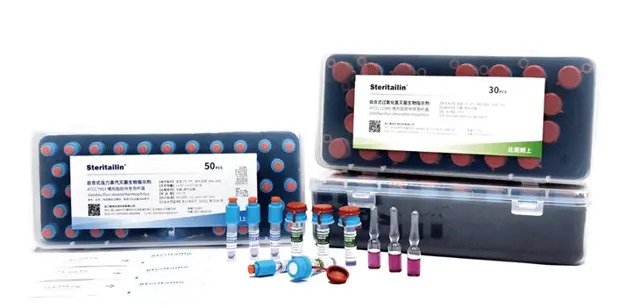

Sterilization is a critical process in pharmaceutical manufacturing, healthcare, biotechnology, food processing, and laboratory environments where products and equipment must be free from viable microorganisms. Simply running a sterilization cycle at a specified temperature or pressure does not always demonstrate that the process has successfully achieved its intended purpose. Biological indicators provide a practical way to challenge and verify sterilization processes by using highly resistant microorganisms or their spores. They help determine whether the conditions inside a sterilization cycle were sufficient to achieve the required level of microbial inactivation.
What Are Biological Indicators?
Biological indicators, commonly called BIs, are standardized test systems containing a known population of microorganisms selected for their resistance to a particular sterilization method.
They are available in different formats, including:
- Spore strips
- Self-contained biological indicators
- Ampoules
- Vials
- Process challenge devices
- Rapid biological indicator systems
The microorganisms used in a biological indicator depend on the sterilization technology being evaluated. Certain bacterial spores are highly resistant to heat, chemicals, radiation, or other sterilizing conditions. Because of this resistance, their inactivation provides a challenging test of sterilization effectiveness.
Why Biological Indicators Are Important
Sterilization processes involve multiple variables. For example, steam sterilization depends on factors such as temperature, pressure, exposure time, and effective contact with saturated steam. A cycle may display the expected temperature and pressure while still having a problem that prevents adequate sterilization in a particular load location.
This is where biological indicators can provide valuable evidence.
A BI introduces a known microbial challenge into the process. After the sterilization cycle, the indicator is incubated or processed according to its instructions to determine whether the test organism survived.
If the biological indicator shows no microbial growth under the specified test conditions, it provides evidence that the sterilization process achieved sufficient microbial inactivation at the indicator’s location.
How Biological Indicators Work
The basic principle behind a biological indicator is relatively straightforward.
First, a known population of resistant microorganisms is incorporated into the indicator. The BI is then placed in a location considered challenging for the sterilization process.
The sterilization cycle is performed under established conditions. Afterward, the BI is transferred to an appropriate incubation or detection system.
If viable organisms remain, they can produce detectable growth or another defined positive signal. A negative result indicates that the organisms were successfully inactivated under the conditions tested.
This process provides a direct microbiological challenge rather than relying only on physical measurements.
Selecting the Right Biological Indicator
Different sterilization technologies require different biological indicators.
For example, indicators designed for steam sterilization are selected based on microorganisms with appropriate resistance to moist heat. Other sterilization methods, such as certain low-temperature chemical or vapor-based processes, require biological indicators containing organisms appropriate for those conditions.
Therefore, laboratories and manufacturing facilities should select BIs based on:
- Sterilization technology
- Microorganism resistance characteristics
- Required population
- D-value or resistance characteristics
- Process conditions
- Applicable standards
- Load configuration
- Validation requirements
Using an inappropriate BI can result in misleading conclusions about sterilization performance.
Biological Indicators and Sterilization Validation
One of the most important applications of biological indicators is sterilization validation.
Validation is intended to demonstrate that a process consistently produces the required result when operated within established parameters.
During sterilization validation, BIs may be positioned at locations considered difficult to sterilize. These locations can include areas where sterilizing agents may have limited penetration or circulation.
The resulting data can help establish whether the selected sterilization cycle is capable of achieving the intended microbial reduction.
Biological indicators should not be viewed as a replacement for physical monitoring. Instead, they complement temperature, pressure, time, chemical indicators, and other process measurements.
Biological Indicators vs. Chemical Indicators
Biological and chemical indicators serve different purposes.
Chemical indicators generally respond to one or more physical or chemical parameters associated with a sterilization process. A visible change, such as a color transition, can indicate that specified conditions were reached.
Biological indicators, on the other hand, use viable microorganisms or their biological response to provide a microbiological challenge.
For this reason, BIs are often considered an important component of sterilization monitoring and validation programs.
Using both physical and chemical monitoring together with biological indicators can provide a more comprehensive assessment of the sterilization process.
Understanding D-Value
The D-value is an important concept when evaluating biological indicators. It represents the amount of time required under specified conditions to achieve a one-log, or 90%, reduction in the viable population of the test organism.
For example, if a microbial population begins at a certain level, one D-value represents a reduction to approximately 10% of that original population under the defined conditions.
D-values are dependent on the organism and environmental conditions. Therefore, they should always be interpreted in the context of the specified sterilization process.
Understanding microbial resistance helps professionals design appropriate sterilization challenges and establish suitable process parameters.
Placement of Biological Indicators
Correct BI placement is essential for meaningful results.
Indicators should be positioned according to the validated process and risk assessment. In a sterilizer load, certain areas may be more difficult to penetrate than others.
For example, air removal, steam penetration, sterilant circulation, load density, container geometry, and equipment configuration can all influence sterilization effectiveness.
Placing BIs in challenging locations can provide a stronger assessment of the process than simply placing them in easily sterilized areas.
Incubation and Result Interpretation
After completion of the sterilization cycle, biological indicators must be handled according to the manufacturer’s instructions and the facility’s approved procedures.
Traditional biological indicators may require incubation for a specified period. If the test organism grows, the result is considered positive, indicating survival.
Modern rapid biological indicators can provide results more quickly through technologies that detect biological activity or specific metabolic changes.
Regardless of the format, controls are important for interpreting results. A positive control can demonstrate that the indicator system and incubation conditions are capable of detecting viable microorganisms.
Benefits of Biological Indicators
Biological indicators provide several important benefits to sterilization programs.
Direct Microbial Challenge
They challenge the sterilization process using resistant microorganisms rather than relying exclusively on equipment readings.
Process Verification
BIs can provide evidence that a sterilization process is capable of achieving the required microbial reduction.
Support for Validation
They can contribute valuable microbiological data during sterilization validation and requalification.
Detection of Process Problems
Unexpected positive BI results may indicate problems involving sterilizer performance, loading, sterilant penetration, cycle parameters, or indicator handling.
Improved Quality Assurance
Routine BI monitoring can strengthen quality-control programs when incorporated into appropriate procedures.
Factors That Can Affect Biological Indicator Results
BI results should always be interpreted carefully. A positive result does not automatically mean that the sterilizer itself has failed.
Potential causes can include:
- Incorrect cycle parameters
- Improper load configuration
- Inadequate sterilant penetration
- Equipment malfunction
- Incorrect BI placement
- Incorrect incubation
- Handling errors
- Contamination after processing
- Problems with indicator storage or expiration
When unexpected results occur, facilities should follow established investigation and deviation procedures.
Importance of Proper Storage and Handling
Biological indicators contain living microorganisms, so their storage and handling conditions are important.
Manufacturers typically specify conditions such as temperature, humidity, and protection from environmental exposure. Indicators should also be checked for expiration dates and package integrity before use.
Incorrect storage can potentially affect the performance of the indicator and compromise test results.
Staff using BIs should receive appropriate training on handling, placement, incubation, interpretation, and documentation.
Role in Pharmaceutical and Healthcare Applications
Biological indicators are particularly valuable in pharmaceutical manufacturing and healthcare environments because sterilization failures can have serious consequences.
They may be used in applications involving sterilization of:
- Pharmaceutical equipment
- Manufacturing components
- Laboratory materials
- Medical devices
- Containers and closures
- Surgical instruments
- Cleanroom equipment
- Other sterilizable materials
The exact monitoring strategy should be developed according to the sterilization process, applicable requirements, and organizational quality system.
Conclusion
Biological indicators play an important role in demonstrating the effectiveness of sterilization processes. By introducing a known challenge of resistant microorganisms, they provide microbiological evidence that a sterilization cycle has achieved the intended level of microbial inactivation.
However, effective sterilization monitoring should not depend on biological indicators alone. Physical parameters, chemical indicators, equipment controls, validated procedures, appropriate load configurations, and proper documentation all contribute to a robust sterilization program.
When correctly selected, positioned, handled, incubated, and interpreted, biological indicators can strengthen sterilization validation and routine monitoring. They provide laboratories, pharmaceutical manufacturers, and healthcare facilities with an additional level of assurance that their sterilization processes are operating consistently and effectively.